
Of all the puzzling and entertaining cultural experiences your average Westerner faces in China, travelling between cities on the high-speed train is actually pretty straightforward.
Kind of.
If you can read Chinese.
And if you’re already used to x-ray machine madness, squat toilets, passengers who fill up giant cups of instant noodles, timely mayhem, and a cruise speed of 350 km/h.
The first step is to figure out which train station you’re leaving from. Big cities like Beijing typically have a south, east, west, and north station. Since we were going to Nanjing, trading the Northern Capital for the former Southern Capital, we were leaving from Beijing Nánzhàn, Beijing South Railway Station.
However, remember that logic doesn’t always apply—this is a country that named a cold northern city “Changchun”, meaning “long spring”.
I would highly recommend taking the subway to get to your train station. Why? Well, because traffic is insane.
I would also highly recommend getting more than three hours of sleep before dealing with the Beijing subway during rush hour with a very heavy backpack. Not that anyone will bat an eye at it, not even the security staff scanning every piece of luggage at every subway station entrance—Chinese people always seem to be dragging suitcases with them in the most unlikely places, from temples to restaurants.
Okay, now you’ve joined the other people with bulky luggage in the subway. Get your passport ready because you will need it to enter the train station, and yes, your luggage will be scanned again.
As far as I know, anything “normal” gets the green light: none of the “100 ml container” airplane-rule bullshit. Feng’s shaving cream was confiscated last year in the subway to the airport—why on earth that specific time, no idea—and my small kitchen knife was also confiscated in 2024 before boarding a train to Beijing. Later, we found out that there was a political meeting in Beijing, hence the zealous check (or maybe that was just a coincidence).
Okay, luggage through the X-ray machine. Now find a human employee to have your passport scanned while all the Chinese passengers scan their 身份证 (shēnfènzhèng) to get in.
Most gates have staff, but occasionally you have to run around shouting “护照 (hùzhào), 护照!” hoping someone will let the Westerner in.
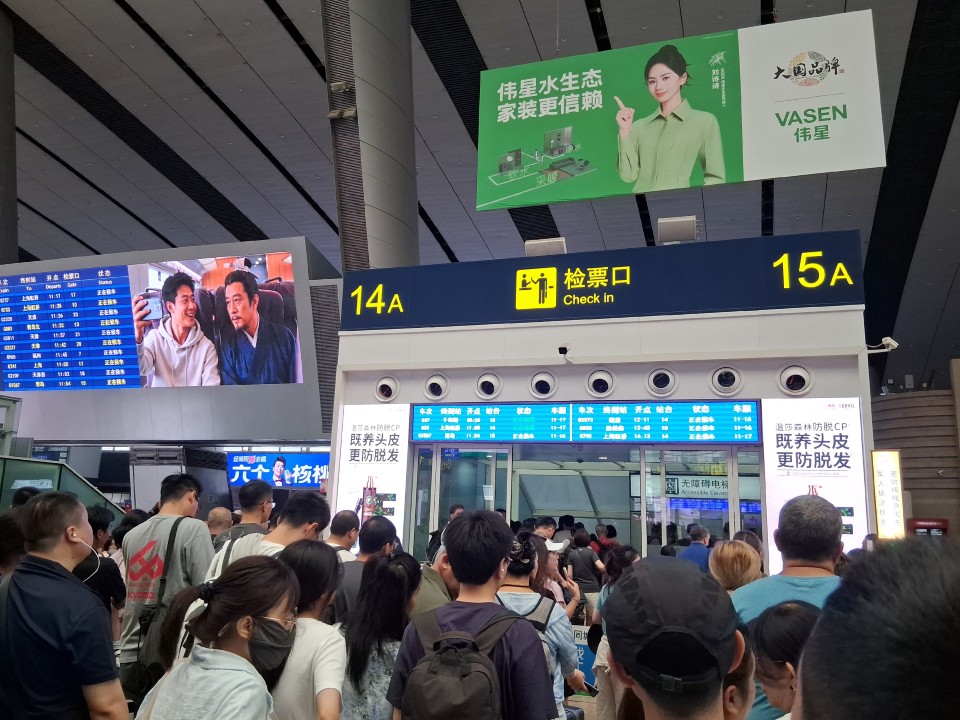
After the subway ride and the security check at the train station, enjoy a brief moment of calm. All the big Chinese train stations seem to look the same—a giant, bright hall on the second level with (not enough) seats and various gates.
They’re packed but very organized.
You’ll find restaurants, convenience stores, vending machines, and yes, free hot water for all your instant noodle needs.
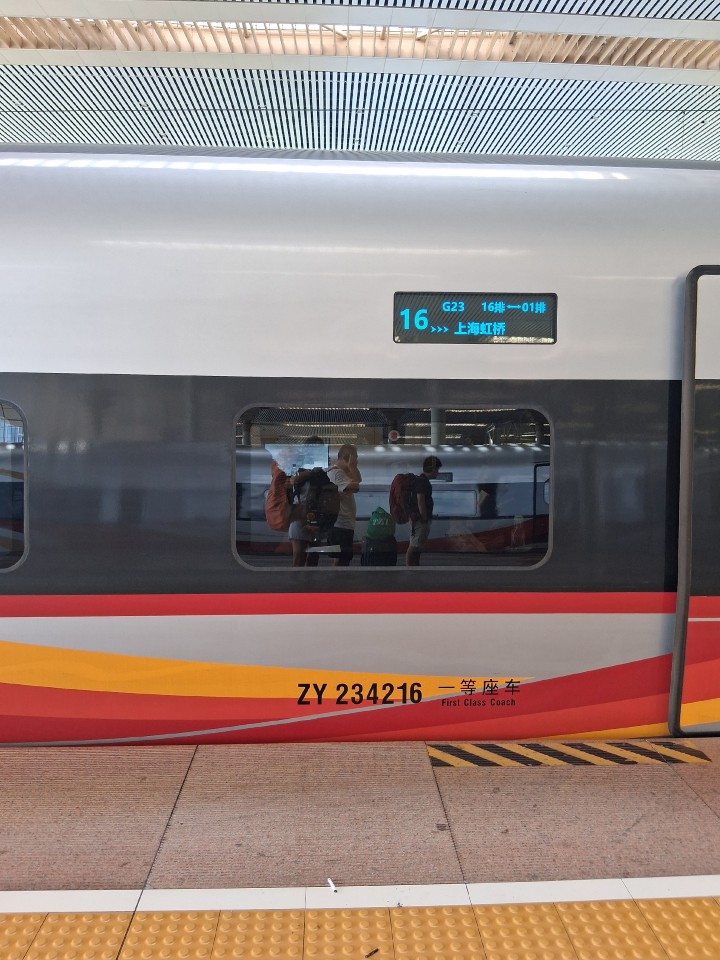
Check the board to find your gate. It’s often easier to look for your train number rather than your destination because your destination may not be the train’s final stop.
People will start queuing 20 minutes or so before boarding. Get your passport ready—you’ll need it again to access the platform, and yes, you’ll need a human employee to scan it while everybody else is scrambling with their 身份证.
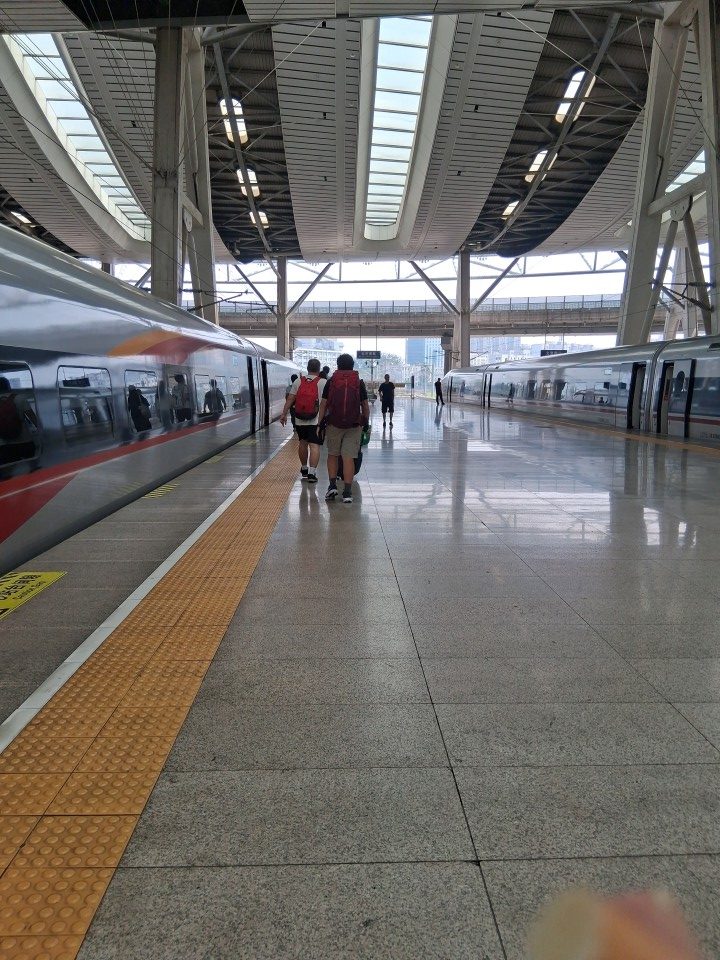
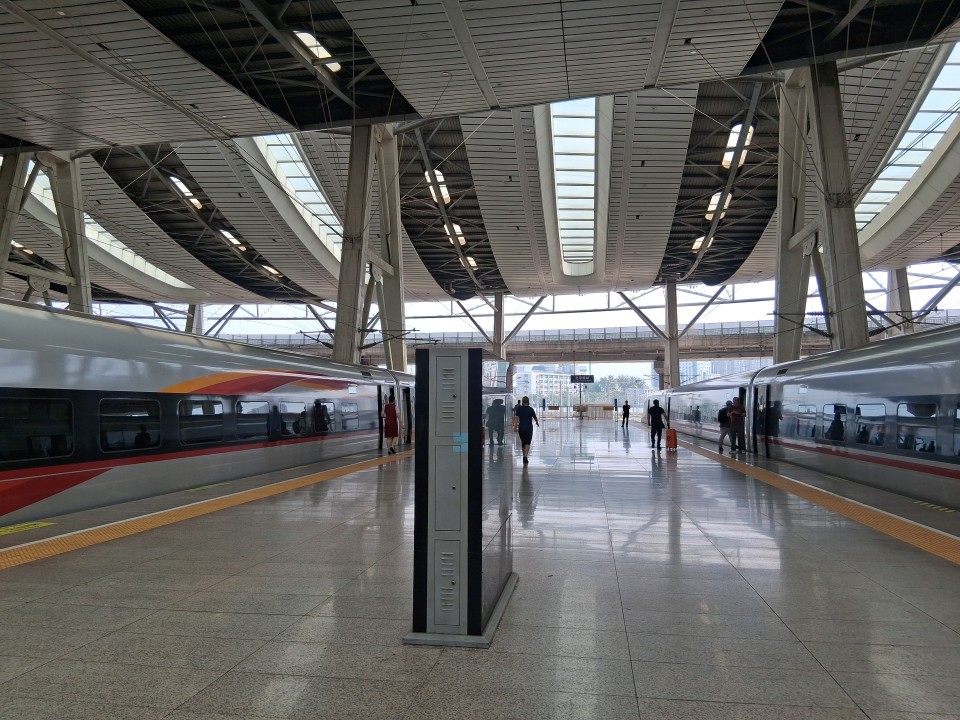
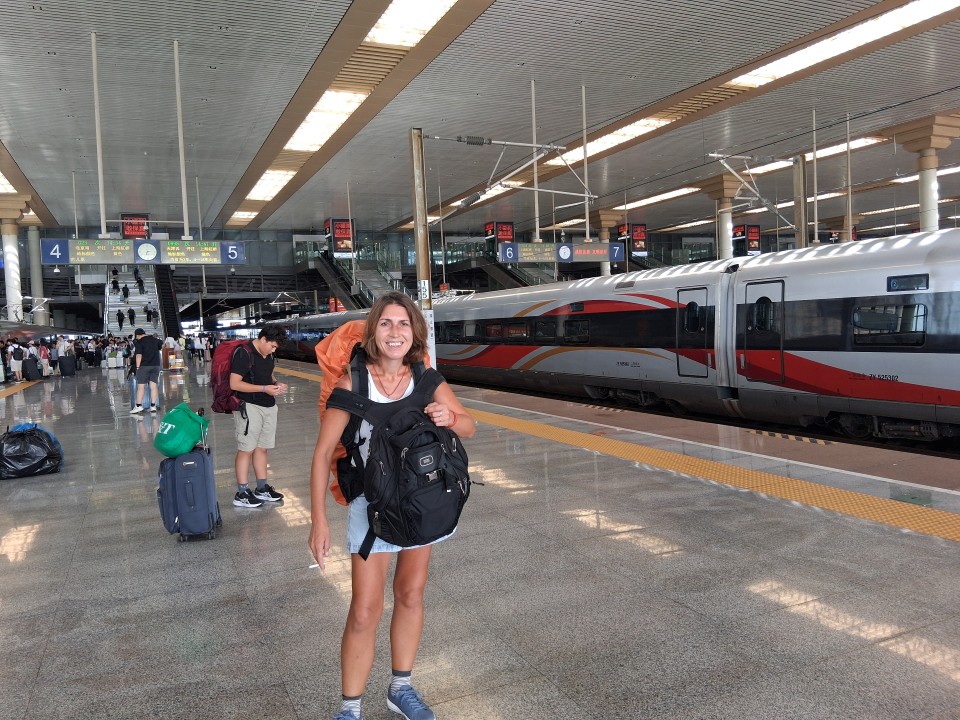
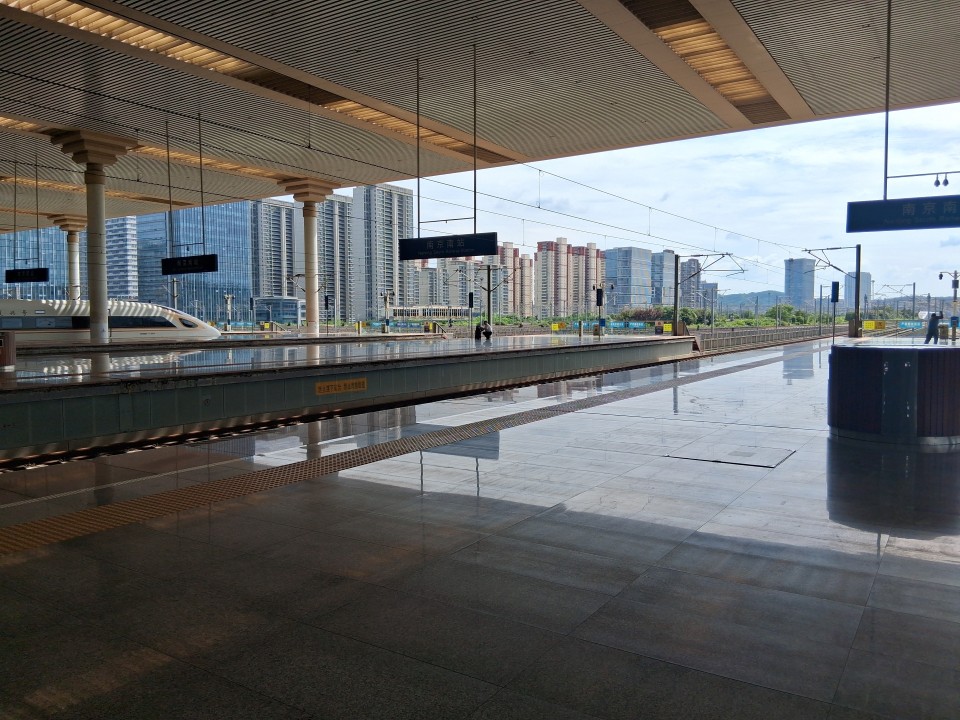
Take the escalator down to the train.
Hell, at this stage, just follow everybody else.
Find your car, your seat, and relax. You’ve made it. This was the tough part of the journey.
Chinese high-speed trains look futuristic on the outside but surprisingly old-fashioned in a cozy kind of way inside. The seats are comfortable, and the train is so steady that you can put a cup of tea on the windowsill—it won’t move, even at high speed.
Crazy.
Fun fact, you will always sit facing the direction of travel because the seats are rotated quickly between destinations.
In first class, you may get a snack box and a drink. In second class, the train staff will check on passengers regularly. Everybody sleeps, scrolls on their phone, or reads; it’s a surprisingly quiet environment.
And next thing you know, you’ve arrived.
Grab your luggage and get your passport ready—yes, you will need it again to exit the station.
We stopped in Nanjing.
And once I figure out why the local delicacy here is apparently duck blood vermicelli soup, I’ll try to explain.











[…] board because as soon as the platform number appears, exactly 20 minutes before departure, it’s a China-like mad rush to the […]