
This time, it was the seats.
I knew there would be something.
There’s always something.
See, before each flight, my brain finds an aspect of the trip, preferably completely irrelevant in the great scheme of things, to worry about.
The most logical concern is a weird departure time or a short connection—fine, late arrivals work too. Winter weather can also keep me busy worrying for days when I’m desperate to leave snow behind.
Now, these are legit travel headaches, granted. But what if I’m taking a direct flight at a completely normal time with a major airline and no blizzard is forecast because it’s summer or I’m a thousand kilometres from the nearest blizzard? Don’t worry, my brain will—it will always find something to obsess about.
Packing, for instance. Not as in forgetting something because apparently I can’t stick to the usual worries all travellers have, but as in breaking or damaging something in my backpack. I have brought back very unlikely things over the years, including a few breakable items, from a cute clay salt pot to my beloved French cookies. Should they go under the clothes or on top? Wrapped in a towel or packed in a box? Did I pack them right? Let’s repack, just for fun. The whole dance keeps me busy for a day or so, the crucial 24 hours before flying.
Failing everything, my plane snacks can be a good source of worry. I tend to pack my own food since COVID: airline meal quality is questionable, the journey is long, and Mark hates the smell of hot meals—it makes him nauseous. So I pack sandwiches for long journeys. This is a good travel tip, people: pack some food and you will never have to pay $20 for an airport sandwich or hear “sorry, we’re out of the pasta option”. Solid food gets through security just fine, far more smoothly than a 110 ml shampoo bottle. I once brought a cooked pizza folded in half for Mark and me to enjoy at some point between Ottawa and Paris.
Anyway, packing food is a great idea unless you’re in China. The concept of a sandwich exists, and so does a word for it (sānmíngzhì, a phonetic borrowing of “sandwich”), but actual sandwich ingredients don’t. For the past three years, I have spent the last day in Beijing wondering what to pack for dinner while flying over one of the -stans. Few things I want to eat are meant to be eaten cold in China. This is not Japan, where cold fish wrapped in cold rice and seaweed is an international delicacy. After red bean bāozi in 2024 (very meh lukewarm) and jiǔcài bǐng in 2025 (a too spongy and greasy Chinese chive pancake), I went for a Chinese-Japanese fusion this year—a temaki sushi filled with crispy chicken.
Obviously, plane food or the fine art of figuring out how to pack this or that are just diversions created by me for me.
Yeah, I’m a lot more anxious than my apparently careless way of living may lead you to believe. It’s just that my list of things that make me anxious might not include the usual anxiety triggers for most people. Wandering around Brazil? Not anxious. Being stuck in Ottawa? Instant panic.
So my brain picks something innocuous to worry about to stop me from worrying about the real big worries. I go with the flow, I let my brain do its thing. Hey, better to frantically look for a packable cold snack in Beijing than cry about leaving China.
For the dreaded end-of-summer Paris-Ottawa flight, I had the seats to worry about.
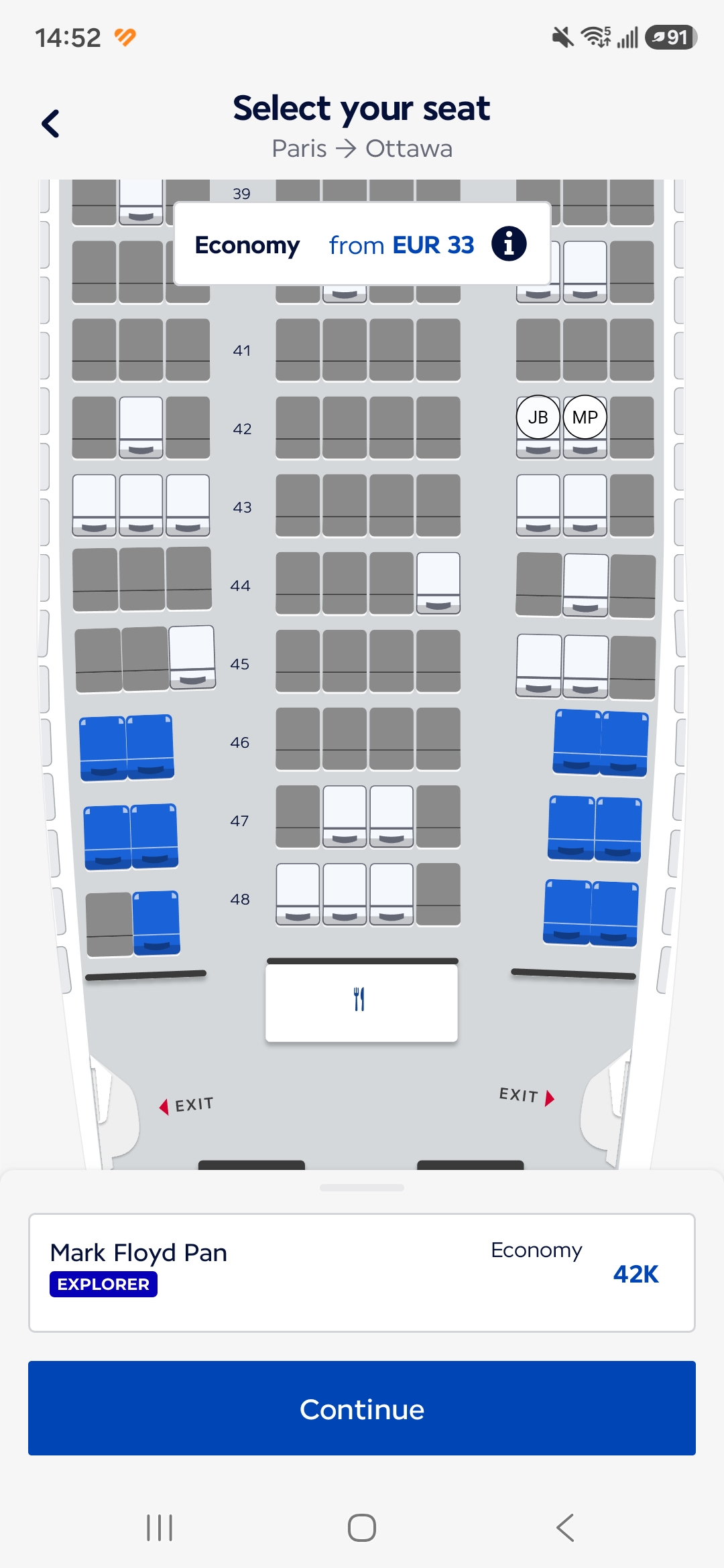
Air France used to let us pick our seats for free. But because of global warming, the war in Ukraine, the Strait of Hormuz, and the world we live in, you now have to pay for them. So I did, reluctantly, in April because I didn’t want to be stuck in the dreaded row of four. I paid again in June because what if Mark and I were seated apart?
Then, after spending a summer with teenage Mark, I decided that if Air France were to relieve me of my parental duties, it would be a blessing. Also, I’m too cheap to pay 66 euros for two middle seats in the back.
I started to worry about the seats. What if Mark had one middle seat and I was also in the middle row, behind or in front? That would suck.
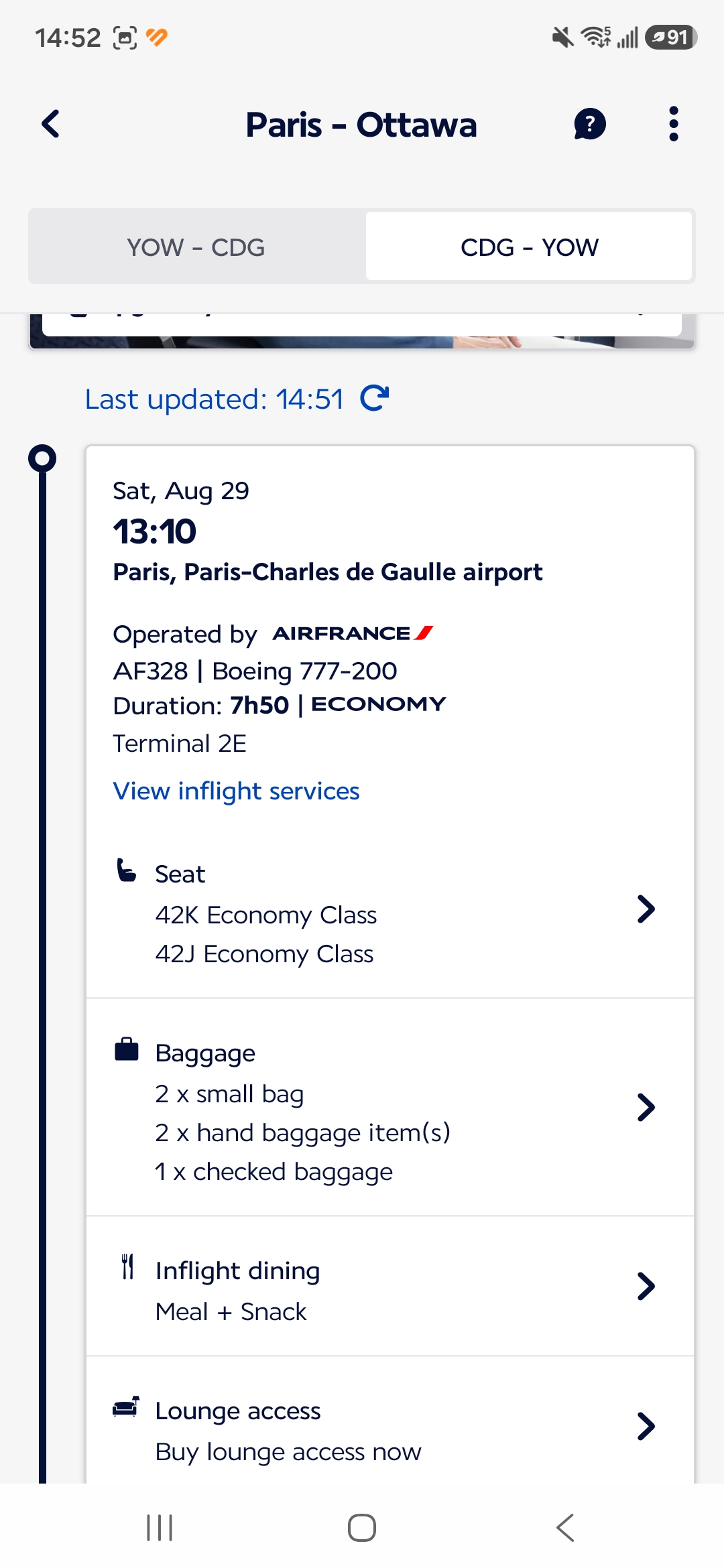
But on Thursday, I opened the Air France app to double-check the schedule and I noticed we had been assigned seats 42 K and 42 J—two adjacent seats in a side row: one aisle seat and one middle seat.
Perfect.
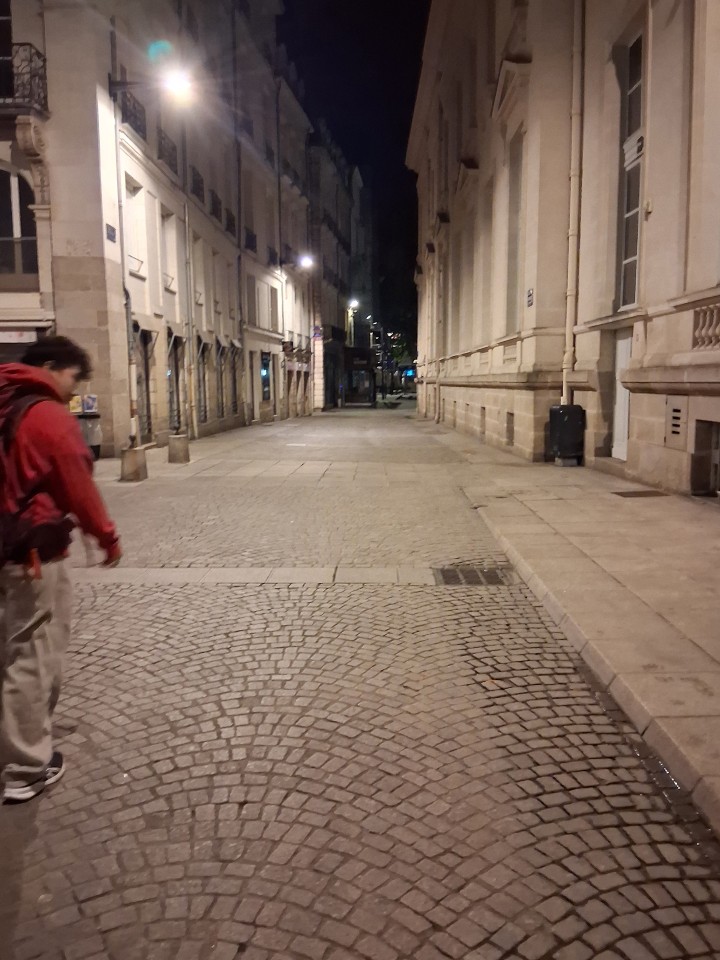
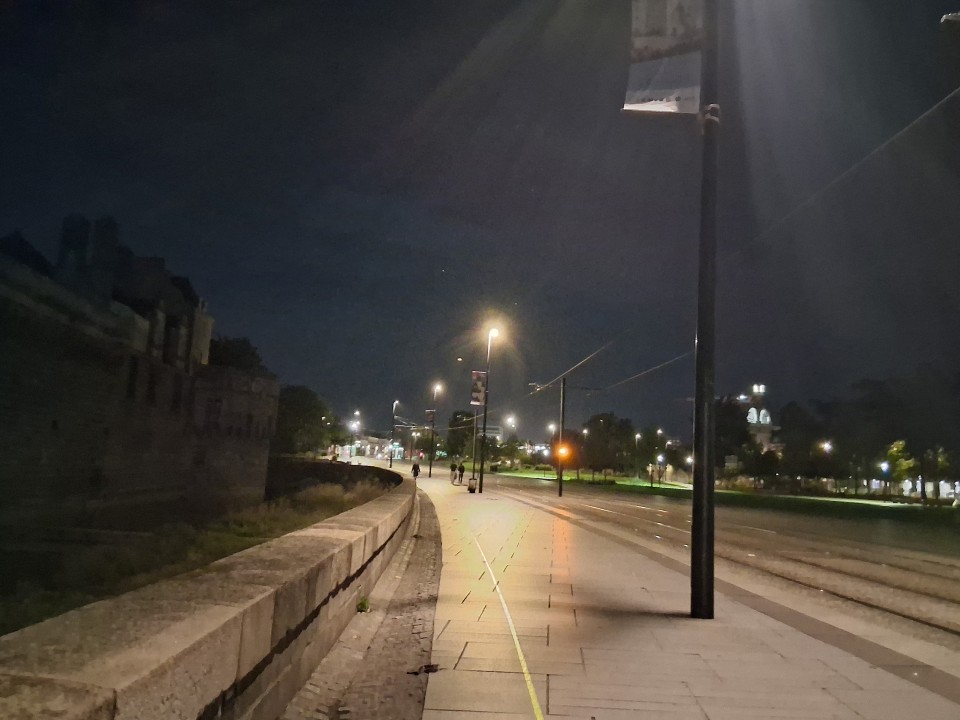
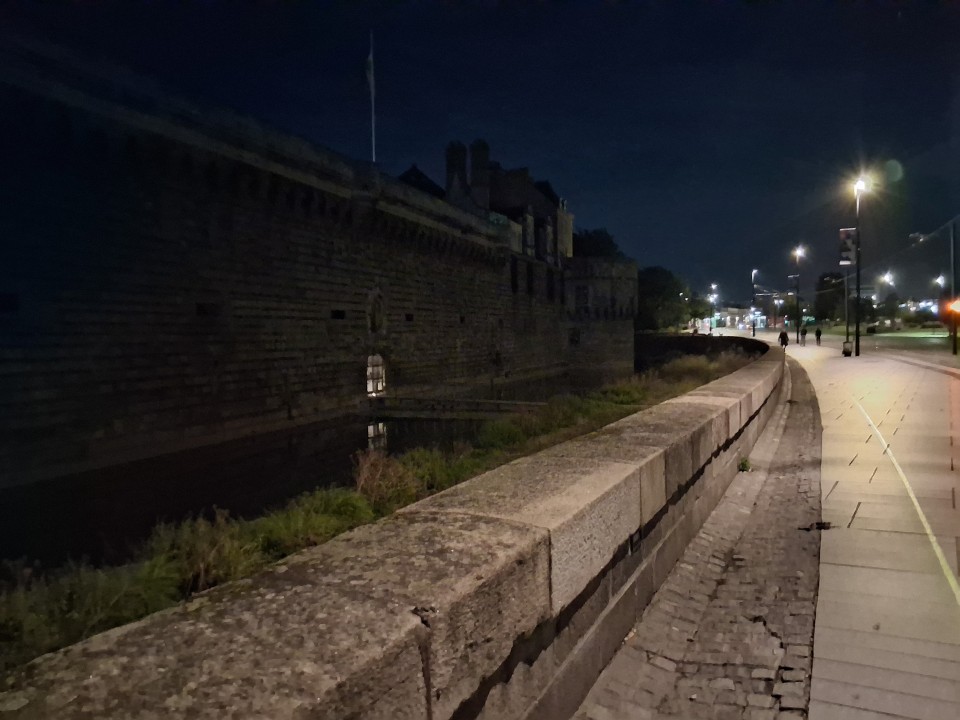
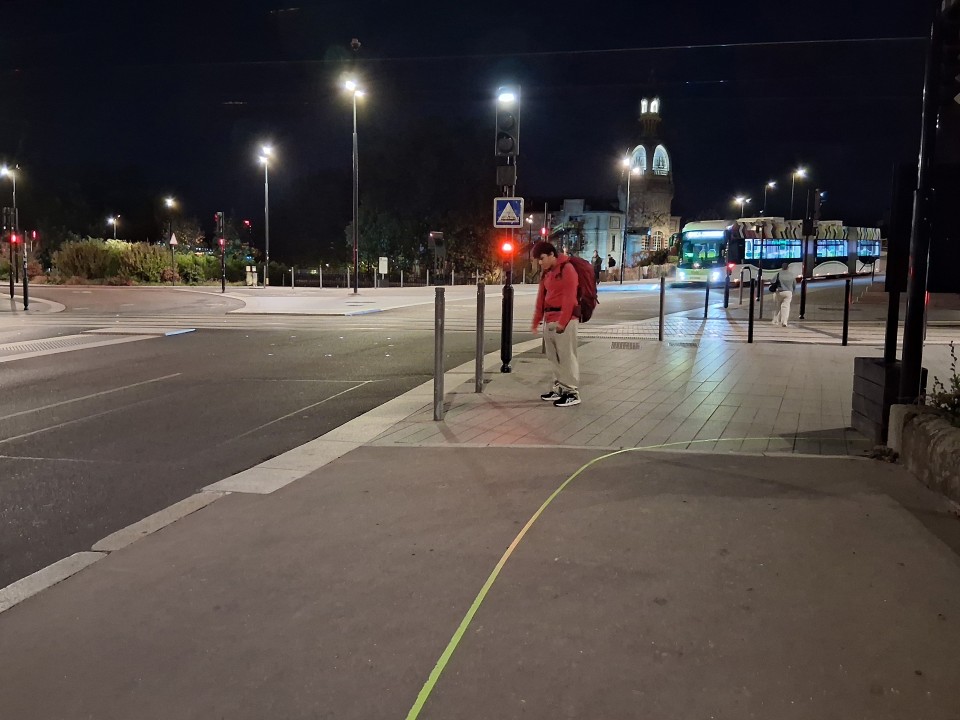
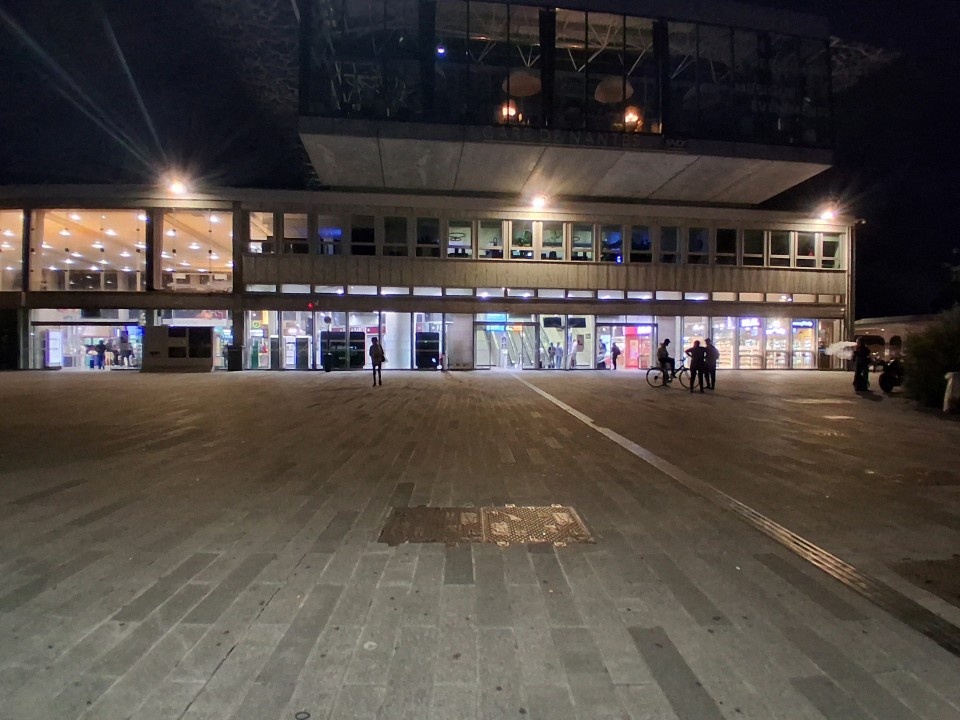
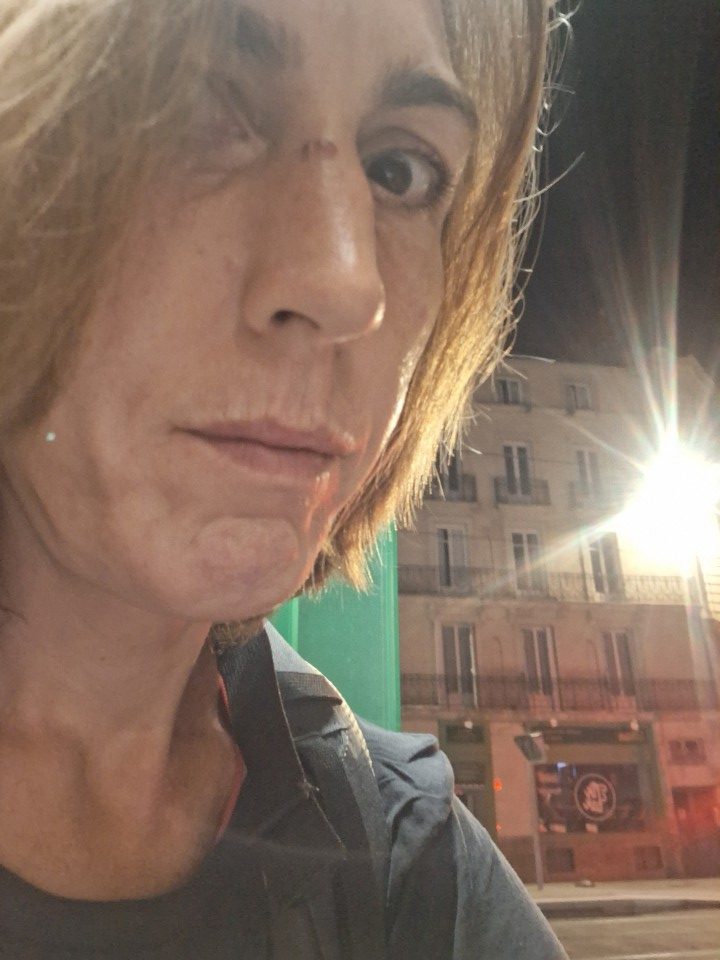
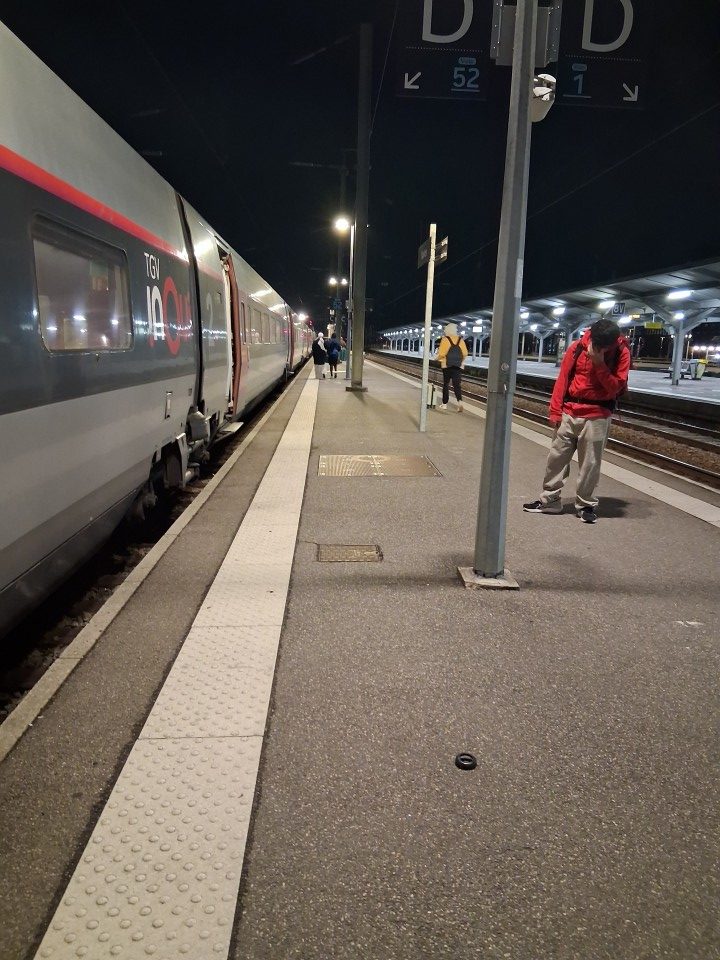
Damn. What was I supposed to worry about for the next 48 hours? Waking up at 4:45 a.m., crossing Nantes on foot at 5:30 a.m. to take the 5:59 a.m. train to Paris? This is routine now: just accept you won’t sleep much, walk fast to avoid the dawn drunks, and don’t think for a minute that the train could be late and make you miss the plane.
So I started worrying about everything else—mostly a grim-looking fall full of uncertainty. Work? No idea. The economy? Same. The meaning of life? Go figure. Geographical names? Not even that, with the dictator down south.
This is probably why I slept on the train and then all the way to Ottawa—after passing on the hot meal and eating my odourless sandwich while Mark grimaced by my side, of course.
“How old are they?” the CBSA officer asked me when I handed over our passports in Ottawa.
“Oh, just this kid is mine,” I replied, pointing to Mark two feet behind me, buried in his red Canada hoodie.
Awkward silence.
Oh, right. Inclusive language. “They” as in “he or she”.
Nothing against the use of singular they, obviously. But when you’re half asleep at passport control, it does make you wonder whether you somehow acquired a second teenager between Paris and Ottawa.
Mind you, that would have been a convenient new thing to worry about for the next few weeks, instead of facing an uncertain fall—one that, hopefully, won’t make me trip.

Tiens, je suis rentré en France hier.
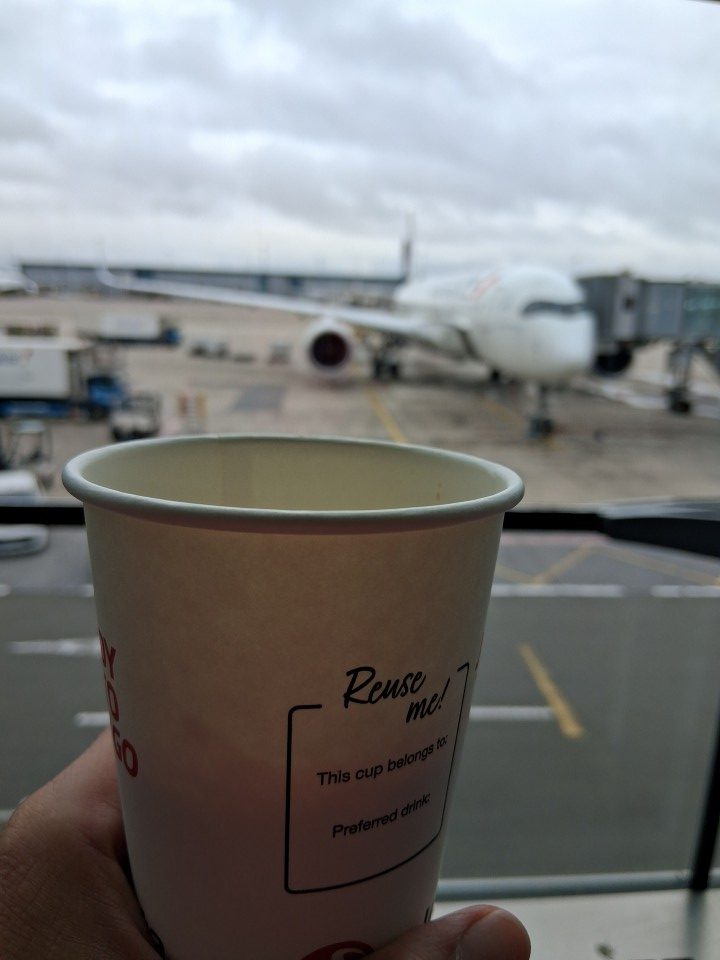
Vu que Air France ne propose pas de vols directs depuis Edmonton, je passe depuis l’année dernière par KLM qui permet de faire Edmonton-Amsterdam sans escale, et qui inclut le train jusque Bruxelles-Midi. Bon, le problème est ensuite d’aller dans ma famille, quand j’arrive à Lille depuis Charles-de-Gaulle c’est plus pratique, mais depuis Bruxelles il n’y a pas d’option rapide. Mais on a pu venir me chercher, donc ça va.
Tu restes jusqu’à quand?
C’est marrant comme vol, Edmonton-Amsterdam. Je ne vois pas trop le marché potentiel, à part celui du shit, m’enfin c’est pas super illégal des deux côtés maintenant.
Le KLM le plus surprenant que j’ai pris, c’est Santiago-Buenos Aires. Là tu hallucines un peu quand on te tends ta gaufre régglementaire au goûter.
Ça fait combien de route de Bruxelles jusqu’à chez toi? Le Bruxelles-midi, c’est le train de 5:59 qu’on prend de Nantes pour aller à Roissy TGV.