
There’s absolutely no chance that a self-respecting French person will mindlessly ask “How are you?” without meaning it. On that side of the Atlantic, these three words are not a greeting but a prompt to discuss your inner life and the state of the world in excruciating detail, preferably over a drink.
However, the French do ask a few weird questions once they get to know you—questions that I can’t remember ever being asked in Canada.
At first, they sound like harmless conversation… except the French don’t do small talk. They’re trying to figure out who you are, socially.
What do your parents do for a living? (“Ils font quoi tes parents?”)
This also works with siblings.
Again, I don’t remember ever being asked about my parents’ job in Canada, and I don’t know what my friends’ parents do or did for a living, although “public servant” is a good bet in Ottawa.
But in France, the question is somehow relevant, even long after you’ve moved out and started living on your own. Your parents’ jobs can say a lot about the world you grew up in, the people you met, the schools you knew existed, and the doors that opened before you even had to knock. In a country where belonging to the bourgeoisie still comes with an invisible instruction manual, “What do your parents do?” is never about getting to know your parents—it’s about figuring out what kind of head start you had.
What was your major in high school? (“T’étais en quoi?”)
Canadians do talk about college or university—mostly how much money they still owe in student debt, but rarely where or what they paid so much money for.
On the other hand, the French are obsessed with degrees and formal education. The bac, the high school graduation exam, is still a required document throughout most of adult life. For years, the type of bac you took worked almost like a personality test with class implications. A “bac S” (science major) is viewed positively; a “bac L” may signal you were one of those stoners taking philosophy (I didn’t get stoned, I swear!). But at least it’s not as stigmatizing as the “bac pro” (vocational training).
And it’s not so much about what you studied, but where.
“Prépas” (cram schools) and “grandes écoles” (elite institutions, like Sciences Po) are highly prestigious, as are a handful of universities and degrees, many of them in Paris, évidemment. The curriculum is solid throughout France, but the networks? Those are built in a few select places.
Where do you go on holidays? (“Tu vas où en vacances?”)
This is an innucuous but loaded question, especially if asked in the abstract rather than when you bump into a friend on their way to the train station.
Regular holiday hangouts tell you a lot about someone’s social status. For instance, there’s the mere fact of going skiing in winter when you live nowhere near Mont Blanc—when I was a kid, half the class came back with the telltale ski tan in February while the rest of us got shipped off to our grandparents. And there’s going to the seaside in Saint-Brévin or Saint-Nazaire… and going to the family house in La Baule.
Saint-Brévin, Saint-Nazaire, La Baule: three towns on the same stretch of coast, all within fifteen minutes of each other, three different tax brackets. The French can hear the difference.
Do you have a driver’s licence? (“T’as le permis?”)
Born-and-bred Canadians take driving skills for granted. For most, it’s just a check mark on the road to adulthood, along with getting a credit card and work references.
I really tackled this one the French way—my driver’s licence was a multiyear saga and I hate driving—but in Canada, getting one is usually an affordable and easy rite of passage. In fact, a driver’s licence is the top ID document in most Canadian wallets, especially since there are no national ID cards.
Getting a driver’s licence in France is a very different story. It’s a lengthy, expensive process averaging €1,800, only 59.9% of candidates pass on the first attempt, and that’s before you factor in the wait for a test date and the inspectors who routinely go on strike.
This is why the driver’s licence question makes sense in France. The answer tells people whether you grew up in the countryside, whether your parents paid for it the summer you turned 18, or whether you’re a 40-year-old Parisian who has never needed one.
Are you left or right-wing? (“T’es de gauche ou de droite?”)
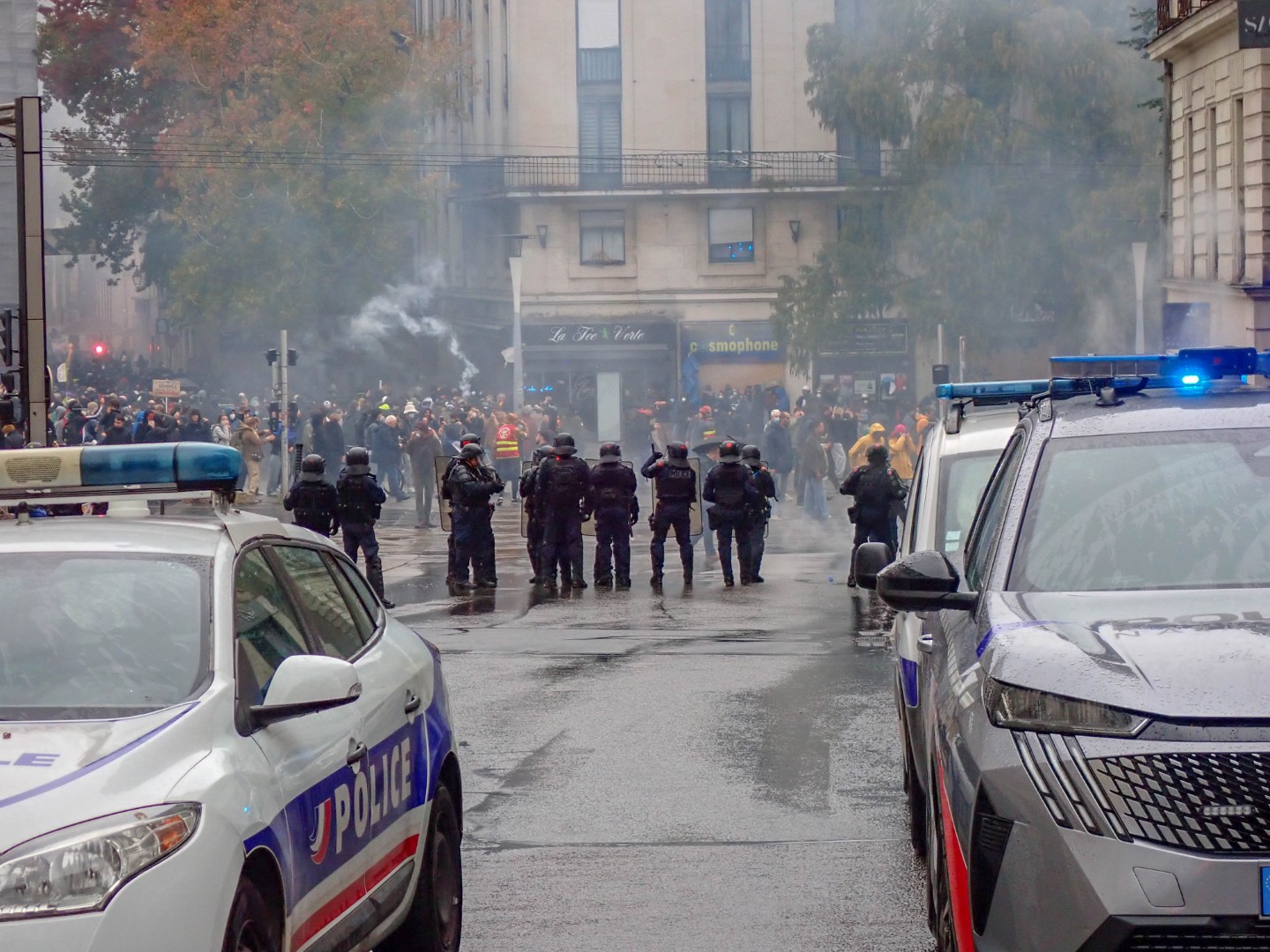
Just in case you didn’t get tear-gassed together in the latest protest, the political affiliation question comes up pretty early when people are getting to know you.
Forget about parties: it all boils down to right or left. Then you can argue the fine print—centre-left, traditional left, left of the left, or on file with France’s domestic intelligence service after a few incidents.
But the real tell isn’t which side you’re on, it’s how you wear it. The bourgeois leftist who votes socialist and volunteers for whatever cause Le Monde recently reported on is a recognizable species, as is the family that says grace before lunch and can’t wait for a government to ban gay marriage again. Left or right, the answer slots you into a milieu—which was the point all along.
Don’t you love the way the French pretend to make conversation while quietly auditing your social class?

Leave a reply