
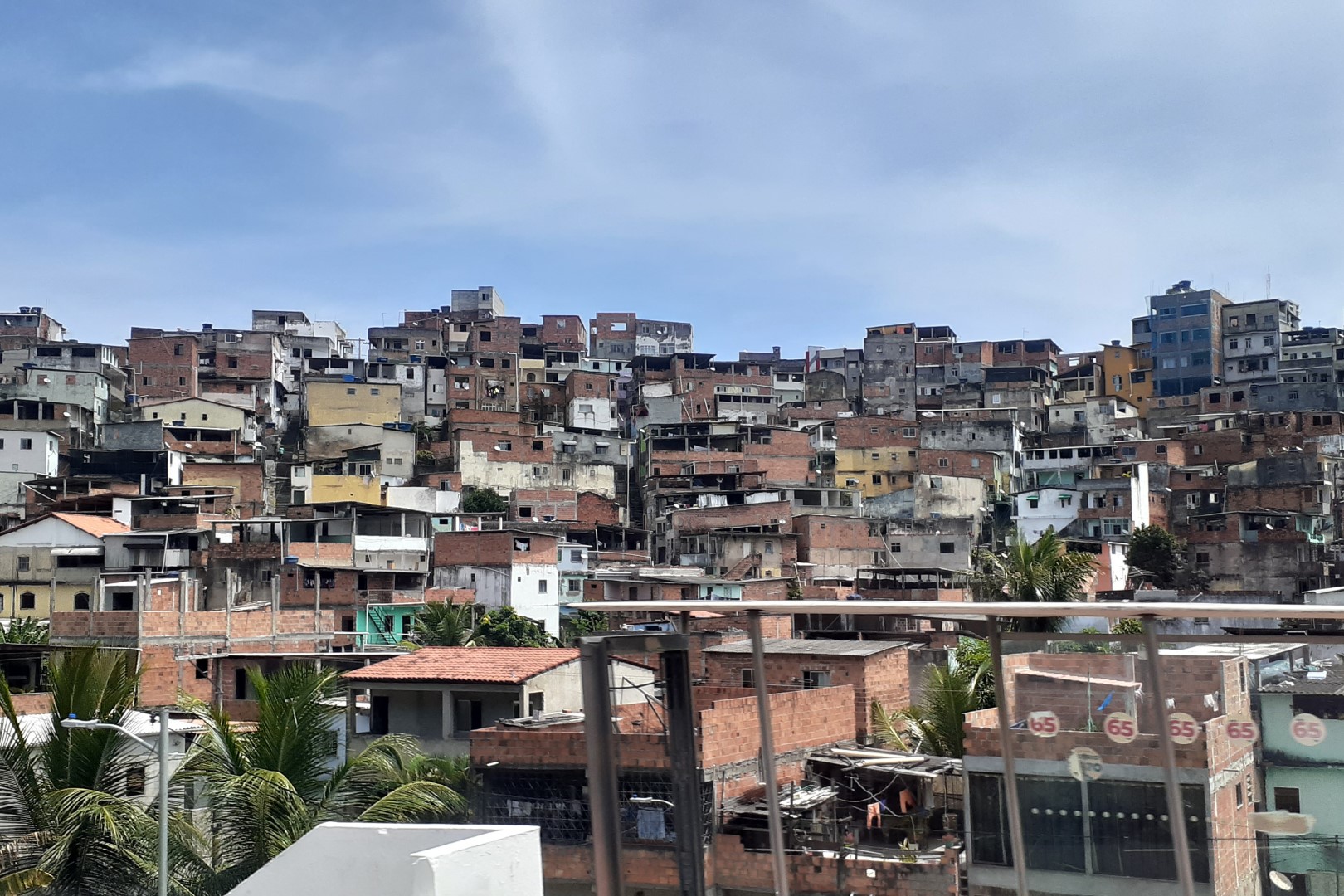
Favelas are part of the cityscape around Brazil. They are occasionally very close to your typical modern environment, right behind a shopping mall or a five-star hotel. They look colourful, intriguing and picturesque.
You can’t miss them in Salvador. There’s one right behind Barra Shopping, actually and many others in distant suburbs or along the seashore.
The place where you eat, shower, sleep, relax, love, figure out life, store stuff and memories and get ready for the day ahead can make or break your trip—or your life.
When I see favelas, for a split second, I think “pictures opportunity.” Then, as I look closer—or more likely zoom on buildings—I try to imagine the thousands of lives in this maze. Favelas aren’t full of narcos and gun-toting teens. You’d be surprised how many people you meet every day live in a favela—people cutting your hair, making your food, helping you find a new swimsuit. I know because I ask. Not directly, obviously, but sometimes it comes up when talking about safety, commuting or the pandemic. “I live in Rocinha.” Ah, I recognize the name of Brazil’s largest favela, located in Rio de Janeiro.
I’m going back to Aracaju. The small state of Sergipe is another world, but the last pictures I will have from Salvador and the state of Bahia are the favelas I see from the bus.





Leave a reply