
People don’t seem to have a lot of money these days.
It’s starting to show, even in Ottawa suburbia.
My “hood” is one of those Ottawa corners most residents can vaguely locate because it sits by the Experimental Farm and two busy thoroughfares. When I first landed here accidentally 25 years ago, the neighbourhood was brand new, which is crazy to European me.
Picture this manufactured place of optimism. On nothing, really—except land, I suppose—a maze of residential streets was designed and given names. The local theme is New York, for some mysterious reason; there’s even a now controversial Trump Street. Then rows and rows of look-alike semi-detached houses were added. They were cheap in the early 2000s. They were what Canadians call “starter homes”, as if we were lobsters bound to look for bigger hundreds-of-thousands-of-dollars shells every few years to make banks, real estate agents and the economy happy.
Never mind the absurdity of the North American housing ladder; it was climbed as instructed until the first crisis in 2008. We had several neighbours, on the other side of the wall, who settled in, had a baby and moved out, presumably into a bigger house and a more distant suburb.
We didn’t even get to properly meet most of them.
Nowadays, I know most people on my street. Many of them are friends, too.
Moving out? Yeah, not in this economy, people whisper between the mailbox and the driveway. The few houses that didn’t stay owner-occupied are now rented to newcomers, most of them from India lately, who live with five or six roommates. That’s not a cultural observation as much as an economic one: this is apparently how many adults it now takes to make suburban rent affordable.
Over the years, between Ottawa and the real world, I watched the neighbourhood grow. There was just a Loblaws when I first came, then a Walmart opened, then a Food Basics, and along with them came several restaurants, one bank, two nail salons and more—basically a bunch of franchises replicated throughout the city, hell, Ontario.
Not much happens in Ottawa. It’s a steady city.
Even less happens in my suburb. It feels sheltered from all the events that rock the world every day.
But eventually, the shockwaves reverberate here too, in sometimes unique ways.
Take the pandemic, for instance. Yeah, the streets were empty, but they are usually empty in April of any given year. What was most unusual was the empty parking lots and the notes on storefronts. This is how you knew something strange was going on.
Something strange is going on right now too—if only you can read the signs.
In the National Capital Region, the main employer is the federal government. Basically, most people have a lanyard, a spot in the convoluted bureaucratic hierarchy and a no-surprise paycheque, career development and retirement.
That’s what people sign up for in Ottawa—a steady life with a steady job. For higher paycheques and a more glamorous life, there’s Toronto. To get rich quick, Alberta used to be the spot.
The changes here are not drastic but subtle, almost insidious. They leak in slowly, through cars, shelves, sidewalks, parking lots, and grocery carts.
And I’m telling you, people have no money these days.
I noticed it.
Suburbia used to hide money anxiety—that’s what credit cards are for, also part of the North American recipe for happiness.
Now the anxiety is visible in the open.
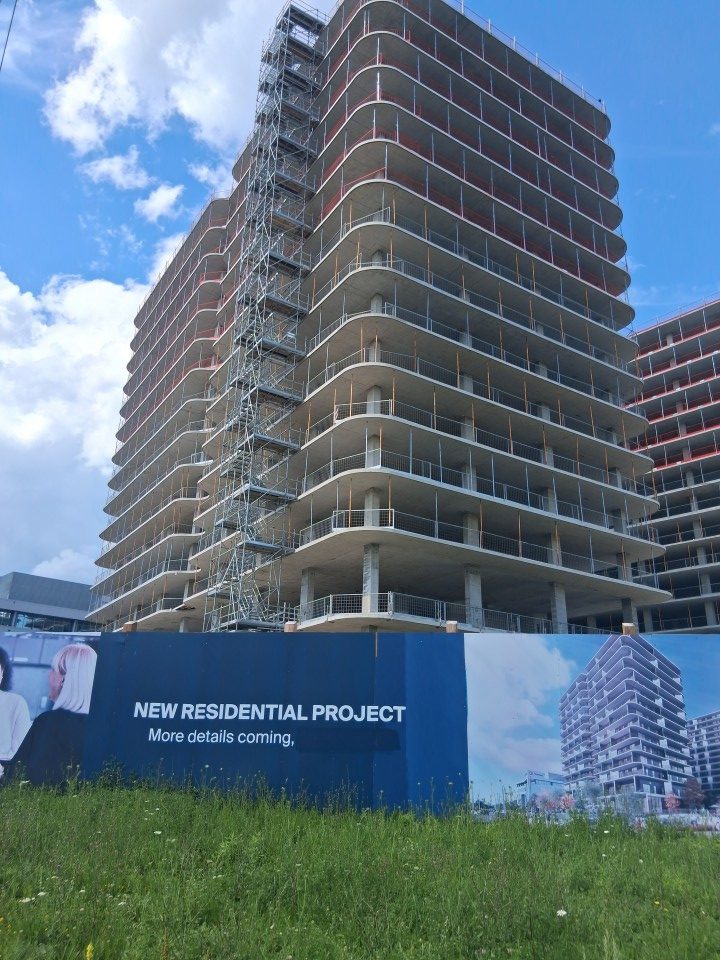
The giant construction site on Clyde and Merivale epitomizes the tough times. The project started right before COVID as a luxury retirement home, then construction stopped, and next thing you know the developer ran out of money, so it’s half finished.
The year on the giant “Coming soon in” signs was corrected once, twice, and now the date is simply blacked out.
It won’t be coming anytime soon.
Now look at the cars driving by or just wander around the parking lot. During the “free money” COVID years, I developed a sixth sense for detecting these damn brand-new silent Teslas behind me—remember, our neighbourhood comes without sidewalks. Clearly, people were splurging, confident in… what was the buzzword, again, during the pandemic? Ah, resilience.
Four years later, the Teslas were presumably sold because I don’t see them around anymore. What I do see is older cars, many of them patched up with construction tape to “fix” a broken mirror, door or bumper. I never used to see patched-up cars. People take care of their ride around here; it’s more than a way to get around, it’s an identity.
At least, it used to be. Now it’s more like “my identity? Broke, like everybody else.”
Oh, but people found other ways to get around. I’ve never seen so many bikes on major roads. Not the fancy “let’s get some exercise, honey” kind of bikes that were popular at one point during the pandemic for lack of better safe things to do, but old bikes ridden by people with way too many bags for a bike.
There are also panhandlers at every light and major intersection. At any time of the day, there are three or four at Baseline and Merivale, walking up and down on the median, a cigarette tucked behind one ear and an empty Tim Hortons cup in hand. When the light is red and the traffic stops, they knock on windows and ask for spare change or whatever, promptly deposited at the “bank” — another empty Tim Hortons cup at the bottom of the traffic sign.
A few metres further, any of the three supermarkets tell a similar story with a different category of characters—your average Ottawa person feeding themselves and a family.
Or at least trying to. Check out the shelves. Anything on sale is usually gone within a few hours. On the other hand, expensive products are gathering dust. I’m used to finding the canned fish shelves empty and the meat fridge full.
Groceries are crazy expensive and probably shoplifted shamelessly, which is why supermarkets now have Fort Knox security. We went from friendly cashiers and tons of products piled up right by the front door to self-service checkout with cameras and employees watching like hawks, receipt checks and metal security gates with designated entry and exit points.
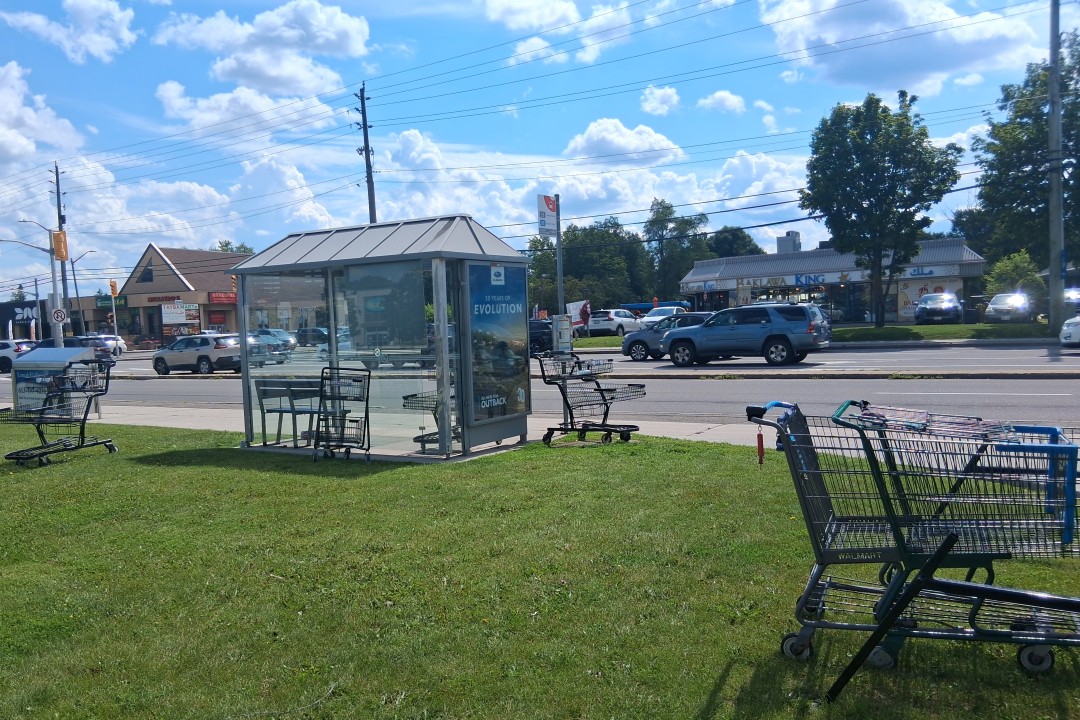
Shopping carts still get stolen, though. Somehow, people manage to drag them beyond the parking lot where they are supposed to lock automatically. I’m now used to seeing people who presumably don’t have a car pushing a full cart of groceries back home, wherever home is—far, apparently. And then shopping carts get abandoned on the side of the road, yet another sad reminder that nobody has money these days.
Except that’s not quite true, of course. Some people do have money—all of it, actually. That’s the problem.

Leave a reply