
This is what I know about Nanjing.
Well, the history of it, mostly. It was the Ming imperial capital before the capital moved to Beijing—hence the names: Nanjing means “southern capital” and Beijing “northern capital.” It became a capital again during the Taiping Rebellion in the 19th century and, one last time (so far), in 1912, as the capital of the new Republic of China and later the seat of Chiang Kai-shek’s Nationalist government. Then came the Japanese invasion and the 1937 Nanjing Massacre, one of the darkest chapters in China’s history.
And somehow, I also know that you can get a room at a university in the summer for $10 a day, that a tiny eatery downstairs makes delicious pizza, that there’s an Internet café on the corner, that the streets flood when it rains, that the local disco plays a lot of Bryan Adams and that Fuzimiao is a fun market to buy souvenirs.
Oh wait.
That was twenty-six years ago.
The story goes that in 2000, a year after my initial summer trip to China and catching the travel bug, I was desperate to go back. Except this time I didn’t want to take summer classes at a university in Beijing. I was 17, I had it all figured out, you see. I would go to Shanghai and… you know, travel. It’s funny how, when you’re a teen, you can have a very specific idea of what you’re going to do without seeing the bigger picture at all. I notice it now with Mark, when he confidently questions our life choices, convinced he’d do a much better job of it—why are we always rushed, tired and not making enough money, really?
Somehow, I convinced my parents that I’d be just fine in Shanghai without a plan. I had very little money and no bank card to my name, by the way, because I was… ahem, 17.
I flew to Shanghai, landed and took a taxi to a hostel listed in the Lonely Planet. But the hostel was full and I really didn’t have anywhere else to go, so I decided to leave for real—not China, just the city. It didn’t feel friendly or cozy.
I took another taxi to the train station and boarded the first train to Nanjing, two hours away. Maybe I’d be luckier in a smaller city.
It worked. I showed up at some university whose name I’ve forgotten and asked to rent a room. And this is where I spent a month and a half. I don’t remember what I actually did other than eat pizza downstairs—no idea why it was on the menu, but it was surprisingly good, although any Italian would have died after tasting it—explore the city and, you know, be 17.
Fast forward 26 years. Feng had never been to Nanjing, so we made it our “new city to explore” this year, after Xi’an in 2024, then Chongqing and Chengdu last year.
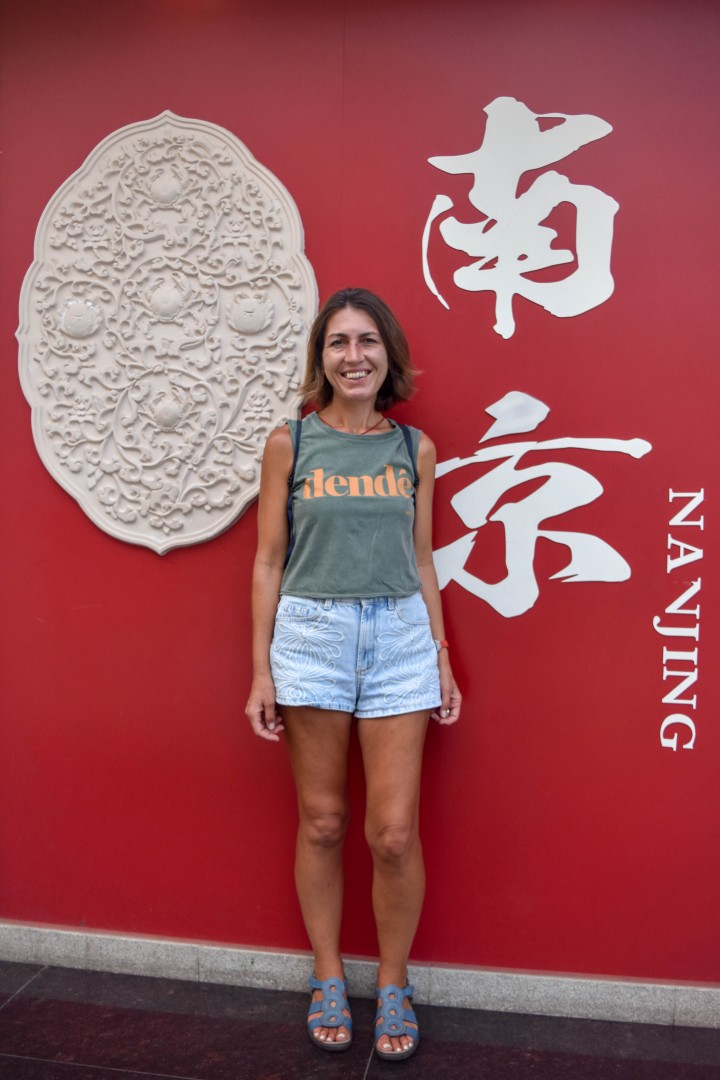
This is us now, at the corner of Zhongshan Lu and Guangzhou Lu, across from the Zhujiang Lu subway station.
My 2026 Nanjing room is a hell of a lot more comfortable than my 2000 Nanjing room. There’s air con, for a start, plus a microwave, a fridge and a washing machine. Mark and Feng next door in room 223 have the same modern conveniences.
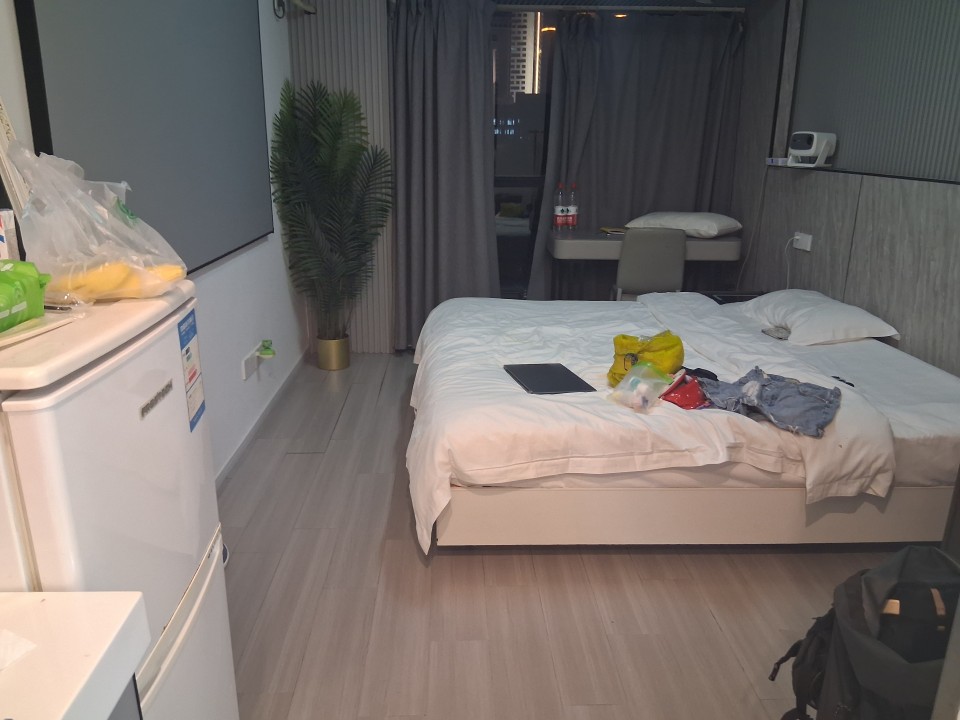
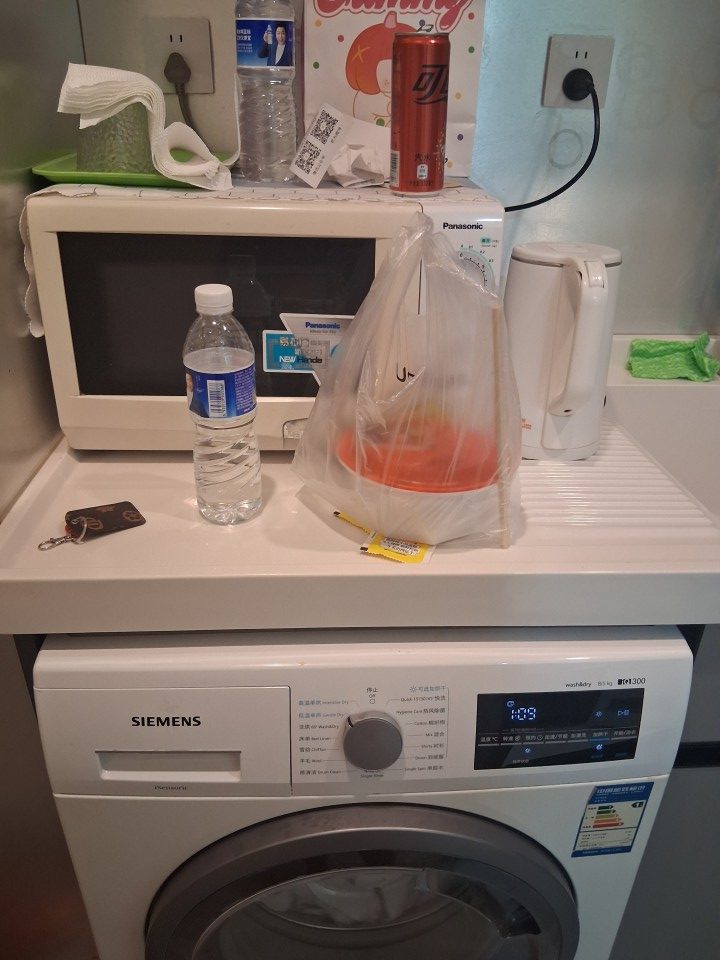
And everything feels brand new to me. Nanjing has changed a lot in 26 years—and so have I.
We’ve been decoding Nanjing for five days now.
Here’s what I’ve learned so far.
The ducks are the new rabbit heads
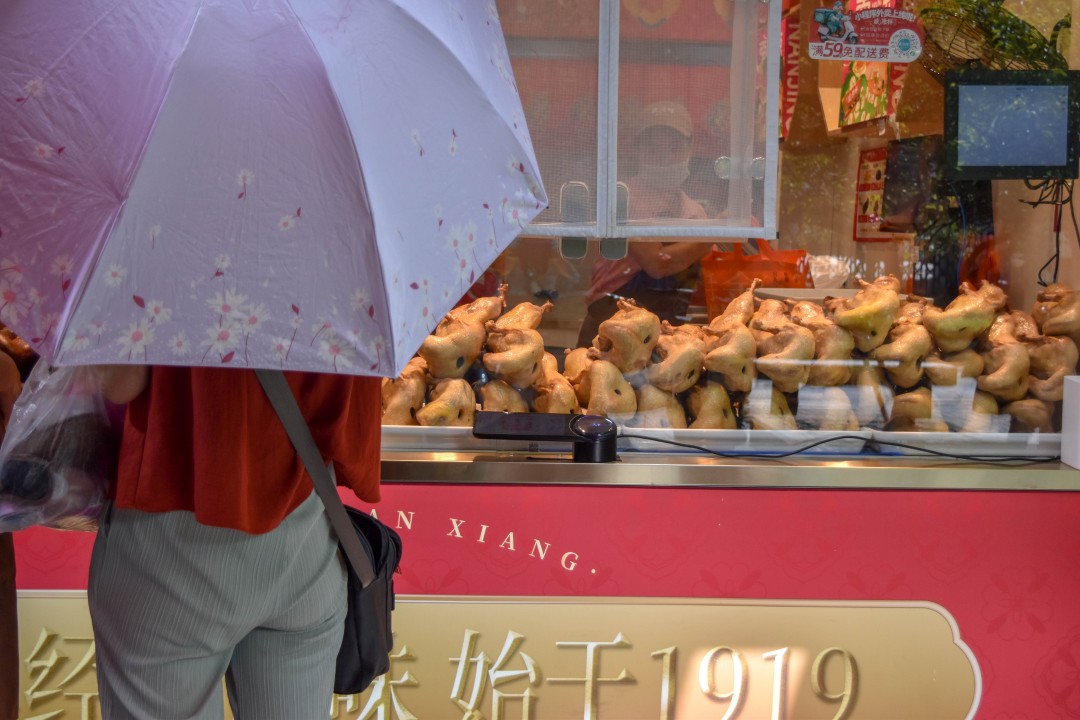
Locals and tourists alike were munching on rabbit heads in Chengdu, but they are obsessed with ducks in Nanjing. Not ducks in parks—ducks hanging in what feels like half the restaurant windows. Nanjing is famous for its salted duck (南京盐水鸭, Nánjīng yánshuǐ yā), as well as roast duck (烤鸭, kǎoyā) and duck blood vermicelli soup (鸭血粉丝汤, yāxuè fěnsī tāng).
The traffic is insane
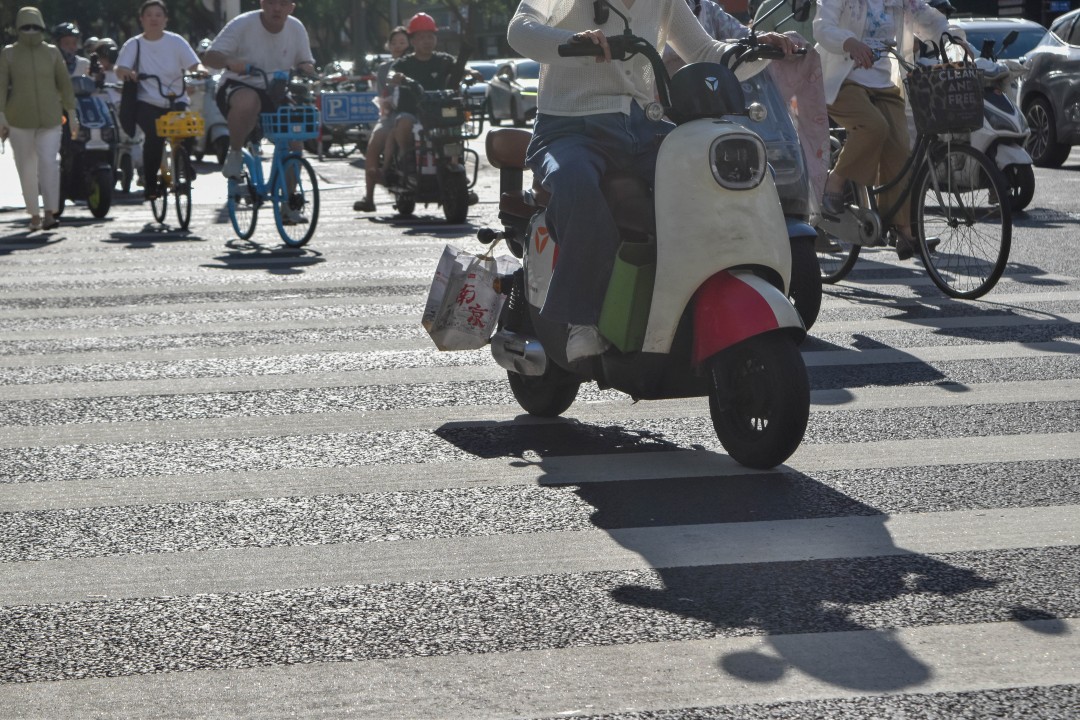
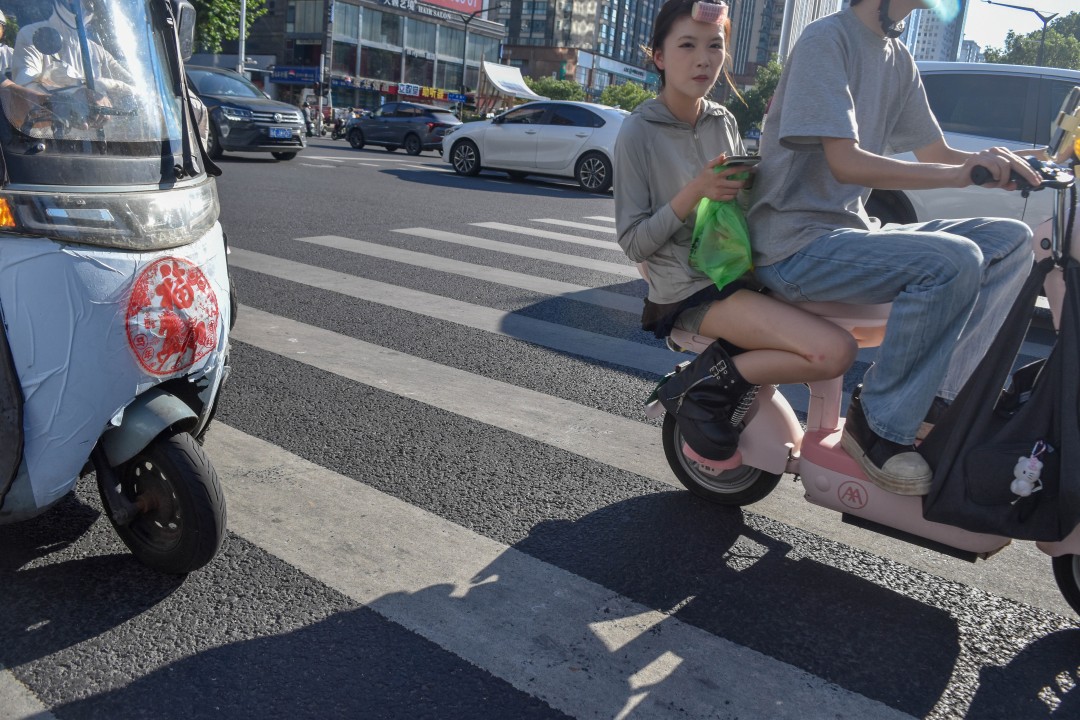
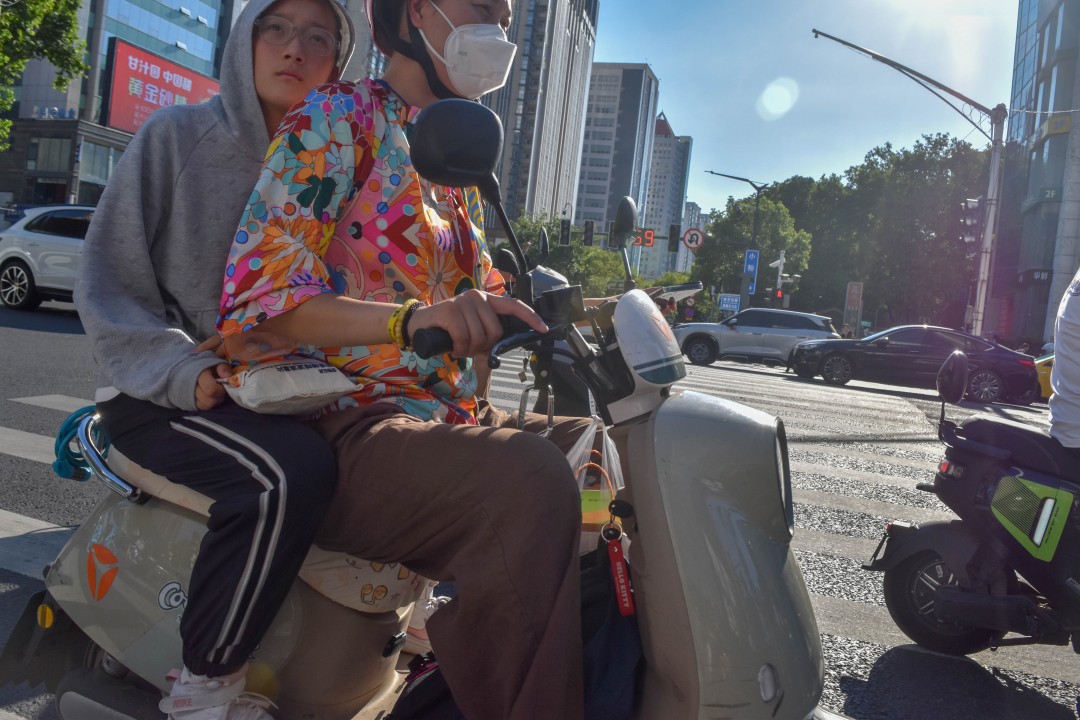
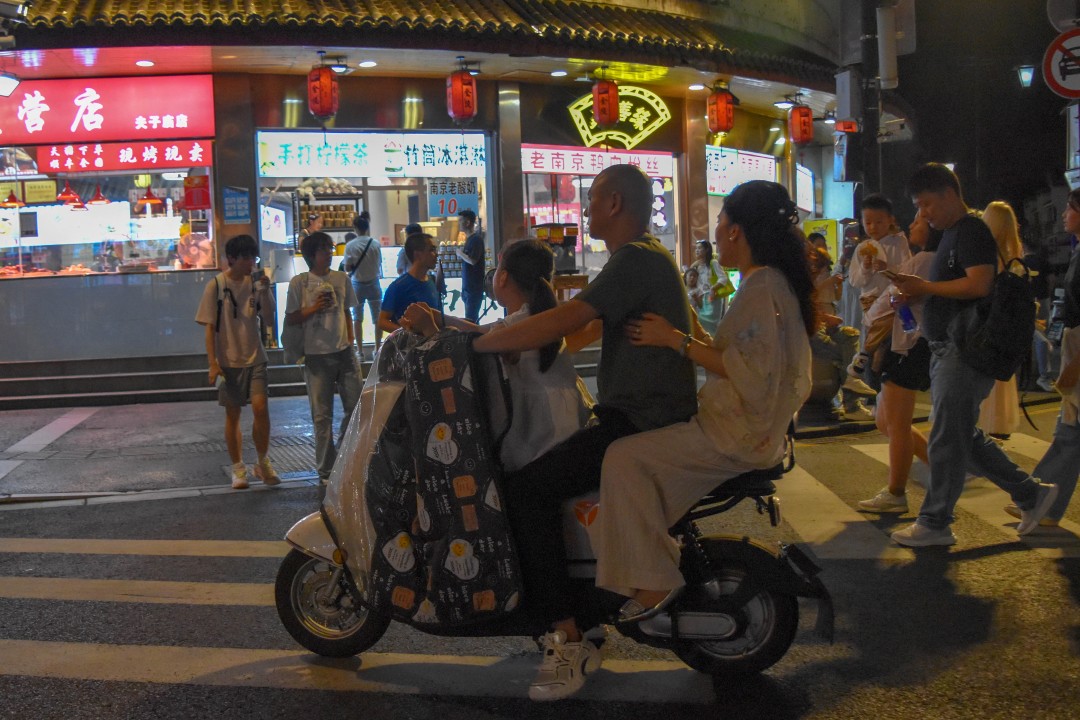
I could spend the day standing at the corner of Guangzhou Lu and Zhongshan Lu, watching wave after wave of people on their motorbikes and bicycles on their way somewhere, briefly forced to stop for a minute or two at the red light.
Here’s an old lady on the back of a bike, munching on a giant cucumber. Here’s a mother with not one, not two, but three kids on her motorbike, two of them somehow fast asleep in awkward positions. Here’s a guy carrying bird cages. Here’s another one with three phones in his hand and yes, he’s driving.
Motorbikes are everywhere—roads, bike lanes, sidewalks. Beep beep, they’re getting through, somehow. I’m developing a sixth sense for dodging them.
Store hours are weird
Most restaurants seem to close around 9 or 10 p.m., which is actually fairly early in China. But for some mysterious reason, the hair salon stays open until midnight, and there’s a 24/7 duck shop nearby as well, because what else would you crave at 4 a.m.?
I’m quite happy the massage place two blocks away closes at 3 a.m., though. I go there around midnight, after finishing work on Canadian time.
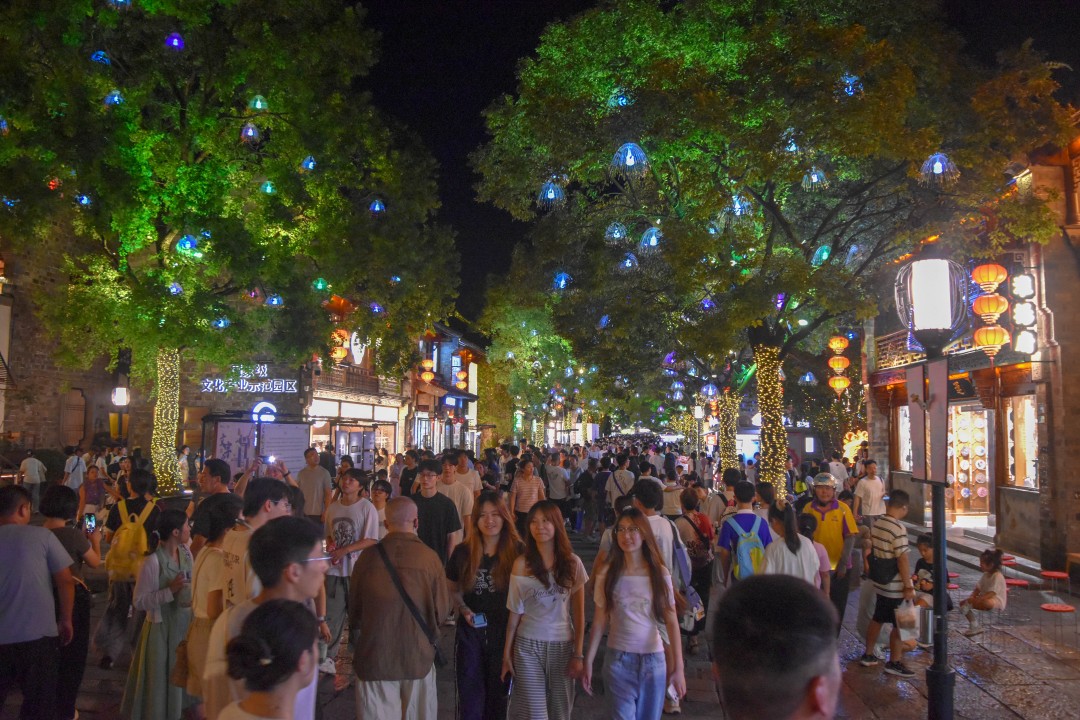
The nightlife is crazy
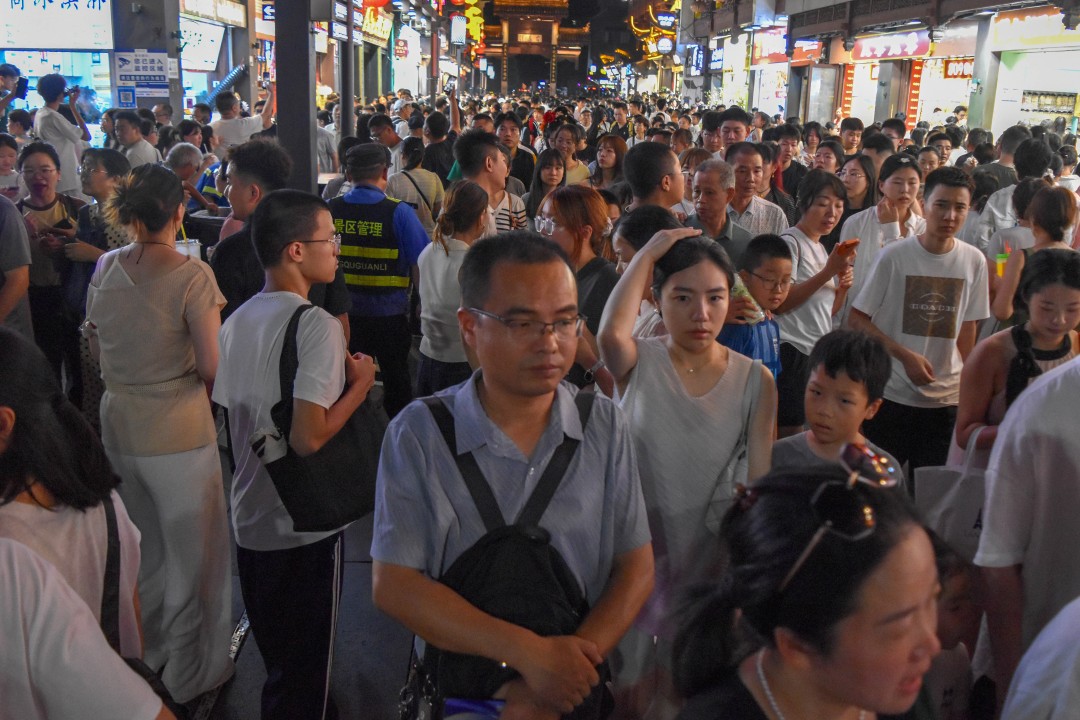
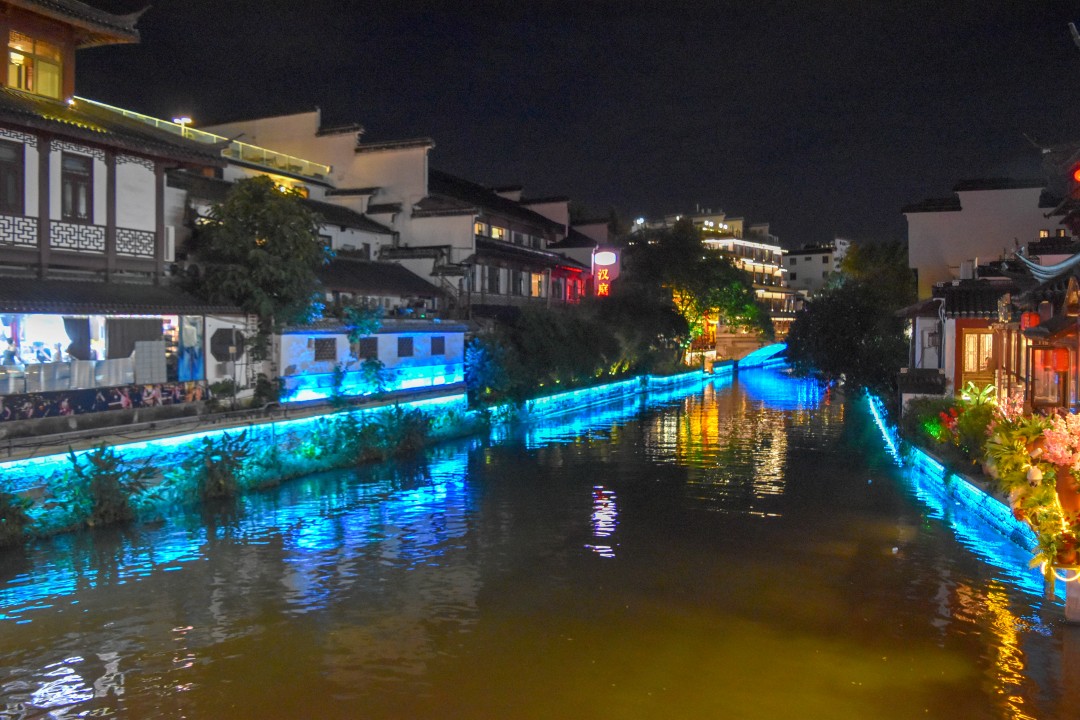
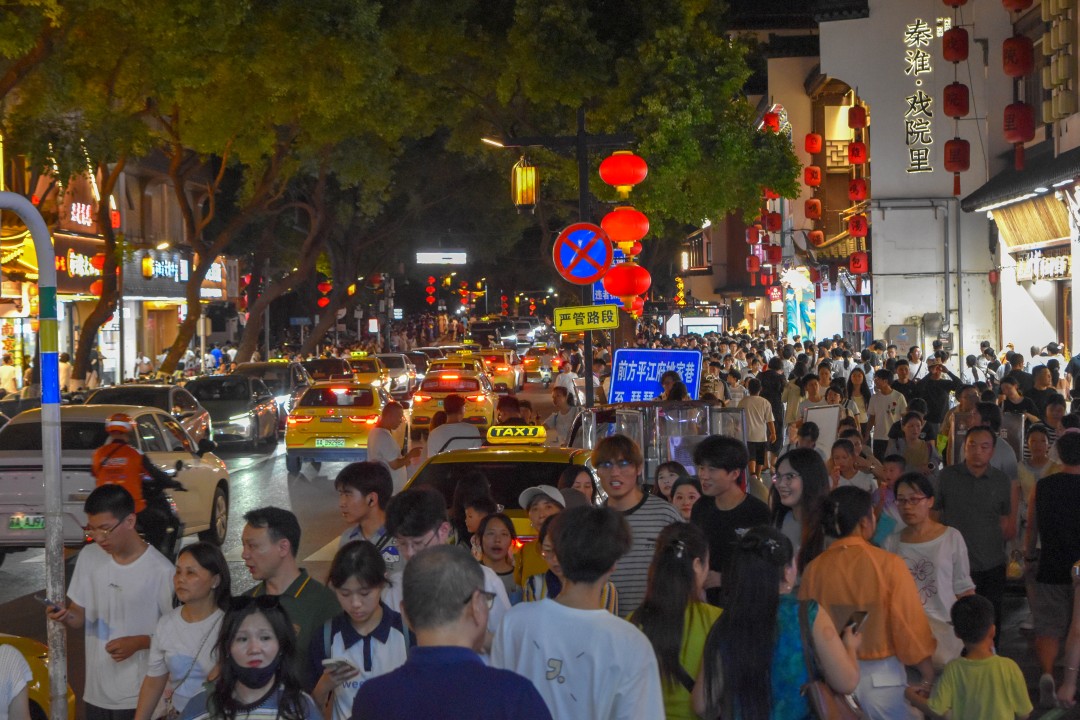
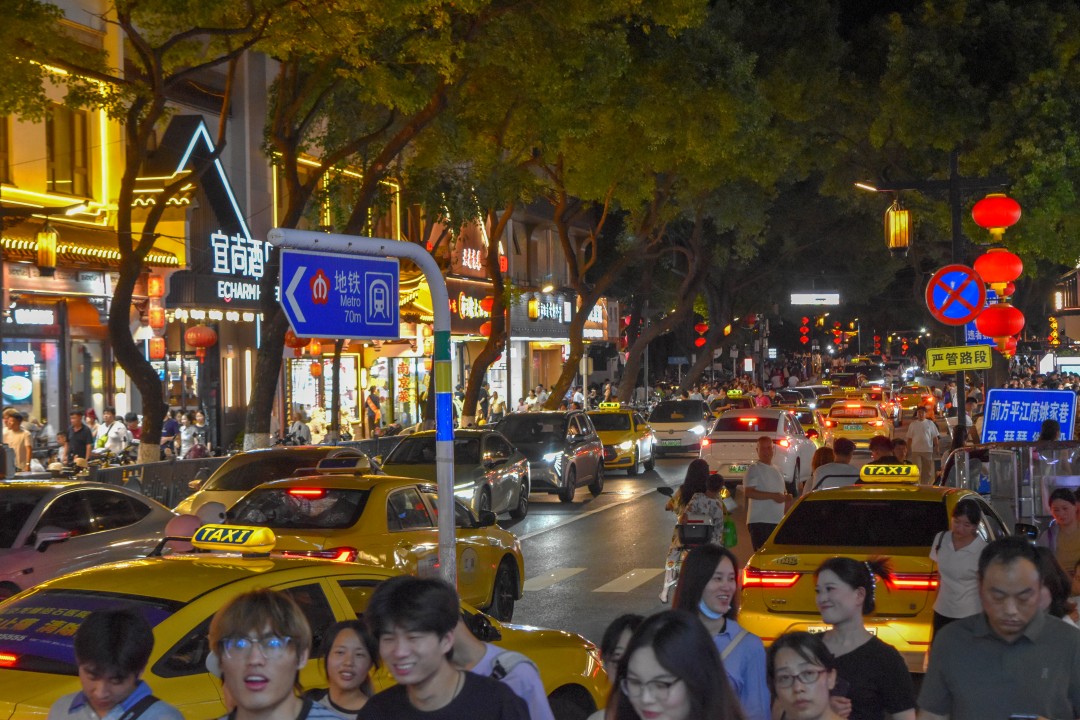
It’s not that the temperature goes down much at night, but locals find it cool enough—ahem, 32°C—to go have fun and eat at one of the city’s picturesque hotspots. Places like Fuzimiao and Longmen light up, and they are completely packed with thousands of people taking boat cruises, tasting street food or just strolling around.
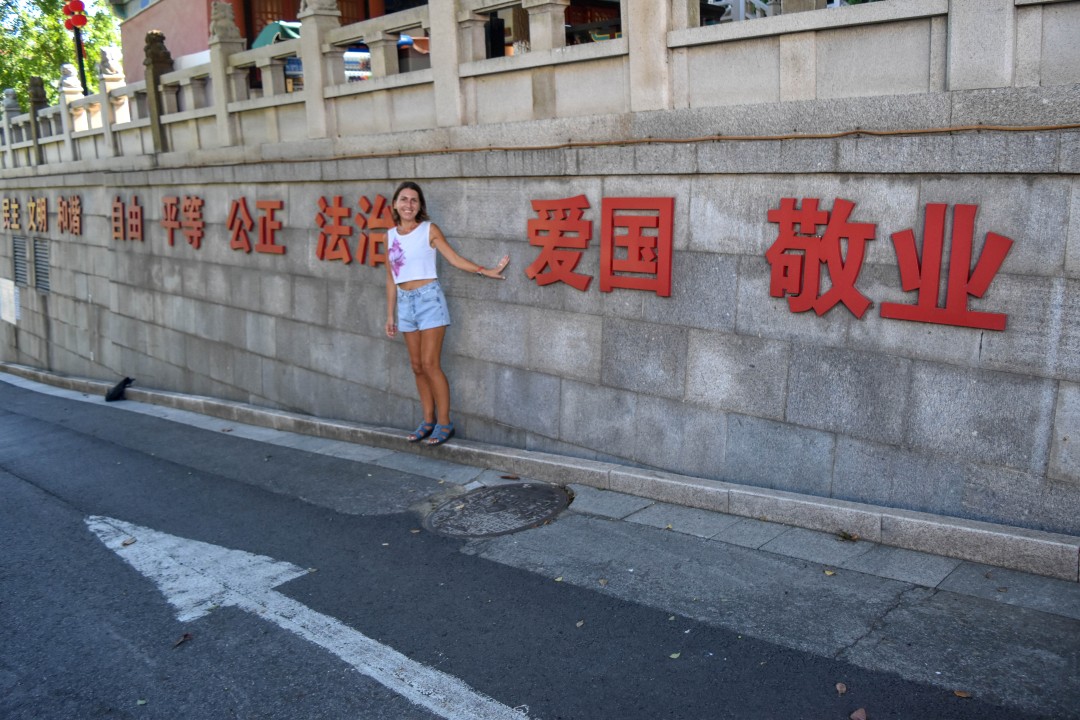
The popular socialist slogan is everywhere
The Core Socialist Values, 社会主义核心价值观 (Shèhuìzhǔyì Héxīn Jiàzhíguān). It gives me something to read on the subway or when I wait at a light.
Fùqiáng – 富强 – Prosperity; Mínzhǔ – 民主 – Democracy; Wénmíng – 文明 – Civility; Héxié – 和谐 – Harmony; Zìyóu – 自由 – Freedom; Píngděng – 平等 – Equality; Gōngzhèng – 公正 – Justice; Fǎzhì – 法治 – Rule of Law; Àiguó – 爱国 – Patriotism; Jìngyè – 敬业 – Dedication; Chéngxìn – 诚信 – Integrity; Yǒushàn – 友善 – Friendliness.
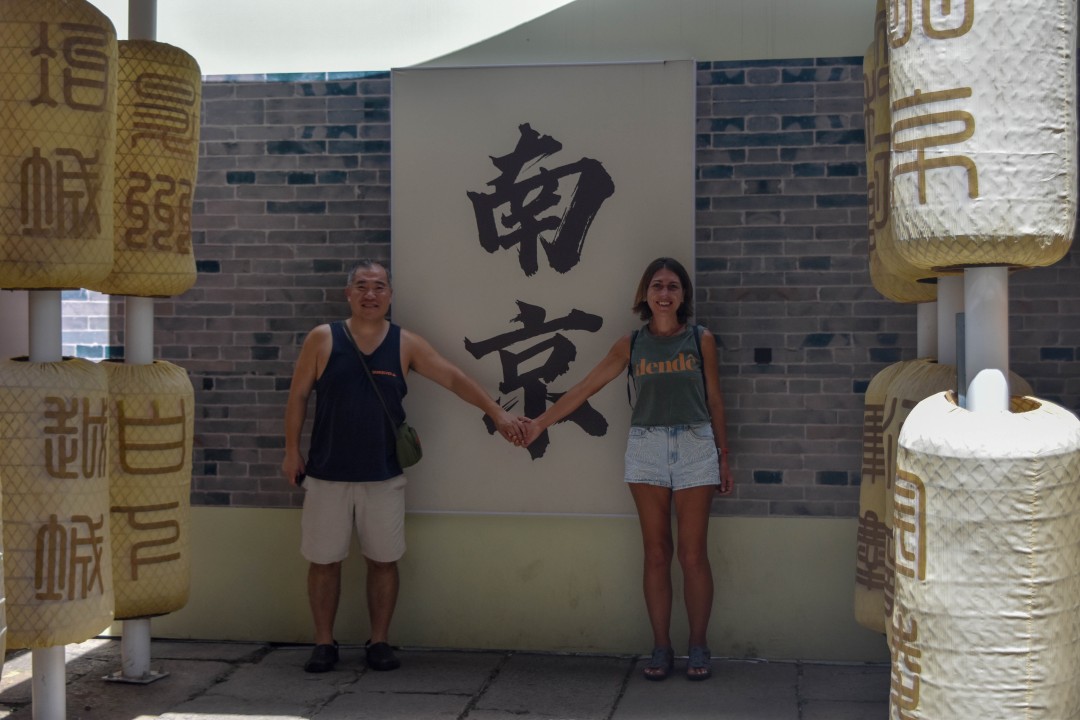
We quite like Nanjing.


Leave a reply